
Fort Lauderdale Condos for Sale: Best Buildings and Buyer Tips for 2026
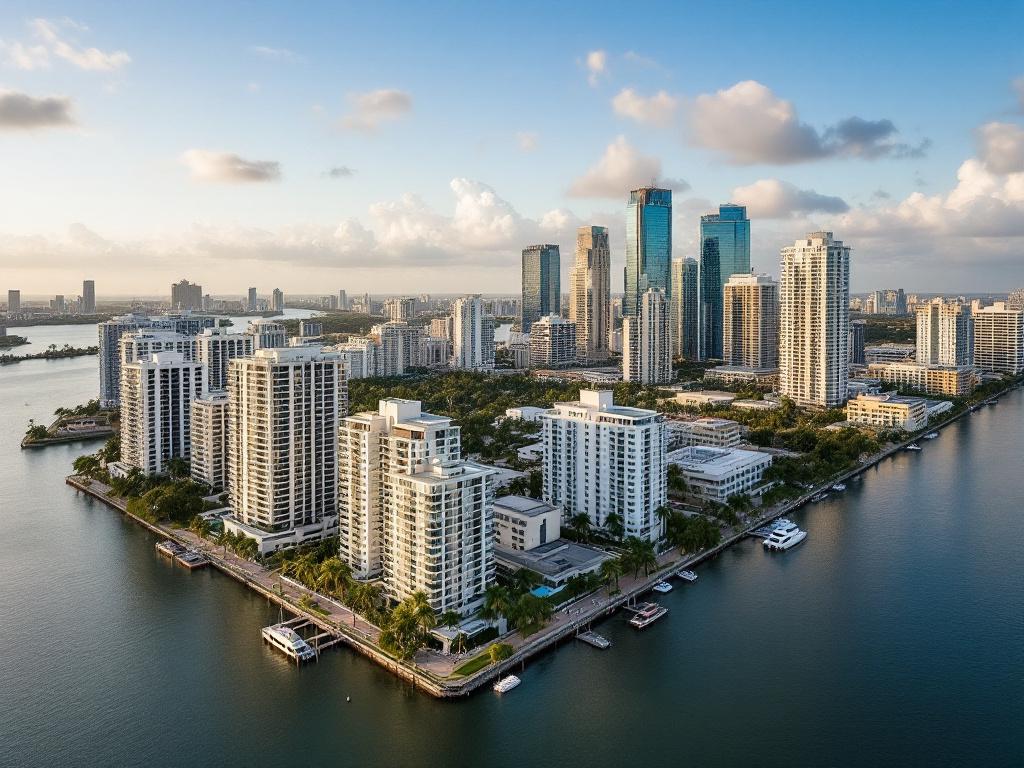
You've narrowed your search to three condos in Fort Lauderdale. One sits in a 1980s tower on Galt Ocean Mile with sweeping Atlantic views and a $1,150/month HOA. Another is a 2018 Las Olas high-rise with concierge service and a $780 HOA. The third is in Coral Ridge — older, quieter, $520/month. The list prices are within $40,000 of each other. Which one will still be worth what you paid in five years?
When you evaluate condos for sale fort lauderdale in 2026, amenities and views are not the variables that determine value anymore. After Surfside, after the Florida insurance crisis, after SB 4-D — the building's reserve fund, milestone inspection status, and HOA financial trajectory now drive resale value more than the view.
The Fort Lauderdale condo market currently shows a median sale price of roughly $400,000, median days on market around 60 days, and median price per square foot near $380, according to Redfin's Fort Lauderdale market data. Those headline numbers hide the dispersion that matters: building-by-building, the spread between strong and weak performers is now wider than it has been in two decades.
Table of Contents
- Which Fort Lauderdale Condo Neighborhoods Actually Hold Value (And Which Are Priced on Hype)
- The Four Condo Building Types in Fort Lauderdale — and Why Building Age Predicts More Than Price
- Five Questions to Ask Before You Tour a Condo Building (That Most Agents Won't Volunteer)
- How to Read Resale Velocity and Price Trajectory in Your Target Building (Without an Agent's Spin)
- Reading the HOA Budget: Where Hidden Costs Actually Live
- Your Pre-Offer Walkthrough and Negotiation Framework
Which Fort Lauderdale Condo Neighborhoods Actually Hold Value (And Which Are Priced on Hype)
Before you sort condos for sale fort lauderdale by price or amenities, sort them by neighborhood economics — because the four archetypes you'll encounter have fundamentally different cost trajectories, demand profiles, and risk envelopes. Generic "best neighborhoods" rankings collapse under the weight of insurance reform and reserve-funding mandates that hit some areas harder than others.
Fort Lauderdale Beach and Galt Ocean Mile carry the highest sticker prices and the highest carrying-cost burden. Median list runs roughly $900,000 with pricing above $800 per square foot, according to Realtor.com neighborhood data. Most of this inventory sits in FEMA Special Flood Hazard Areas — Zones VE and AE per the FEMA Flood Map Service Center — which forces mortgaged buyers into federal flood insurance and pushes structural standards higher for any new construction. The offset: international and second-home demand remains the deepest in this segment. Florida Realtors' 2023 Broward County profile shows roughly 40–45% of Broward condo purchases were non-primary residences, and beach inventory skews well above that average.
Downtown and Las Olas trade walkability for luxury concentration. Walk Score reaches roughly 90 per WalkScore.com, with median list prices around $700,000 and pricing in the $600–$700 per square foot range. But the South Florida Business Journal reported that luxury inventory above $1M roughly doubled from 2019 to 2023 while closed sales rose more slowly — which translates into longer resale timelines at the top, particularly for owners who paid 2021–2022 peak pricing.
Coral Ridge is the established mid-market. Median list near $450,000, pricing $350–$400 per square foot, Walk Score around 55 (you'll need a car). The trade is favorable for owner-occupants: mature mid-rise buildings with predictable HOA histories, less volatile insurance exposure than oceanfront, and a buyer pool that includes primary residents rather than speculators. Coral Ridge condos consistently show the best risk-adjusted resale profile in the city for buyers who plan to hold five-plus years.
Victoria Park sits between Las Olas and Coral Ridge. Median list around $500,000, pricing $400–$450 per square foot, Walk Score near 75. Smaller buildings dominate the stock, which means fewer amenity-cost surprises — no rooftop pools requiring six-figure replacements, no concierge staffing burdens, no marina dredging assessments. Buyers cross-shopping coastal South Florida should also weigh how the Delray Beach condo market compares on price and walkability before locking into a Fort Lauderdale-specific decision.
The point is not that one neighborhood beats the others. The point is that lifestyle priority and financial durability rarely point to the same building. Coral Ridge and Victoria Park usually win for owner-occupant resale stability. Beach buildings command premium pricing but carry the steepest cost trajectory — insurance plus assessments compounding faster than appreciation in some cases.
| Neighborhood | Median List | $/Sq Ft | Walk Score | Owner-Occupant Resale |
|---|---|---|---|---|
| Fort Lauderdale Beach | ~$900,000 | $800+ | 60–70 | Moderate (high carry cost) |
| Downtown / Las Olas | ~$700,000 | $600–$700 | ~90 | Moderate (luxury oversupply) |
| Coral Ridge | ~$450,000 | $350–$400 | ~55 | Strong |
| Victoria Park | ~$500,000 | $400–$450 | ~75 | Strong |
Which columns matter most depends entirely on your use case. An investor underwriting short-term-rental cash flow weights walkability and rental demand; the price-per-square-foot column matters mainly as a denominator in yield calculation. An owner-occupant on a five-to-ten year horizon weights resale durability and carrying cost — the middle two columns dominate. No column is best universally. The table is a filter, not a ranking, and the buyer who treats it as a ranking will overpay for the wrong attribute.
The Four Condo Building Types in Fort Lauderdale — and Why Building Age Predicts More Than Price
Most buyers categorize Fort Lauderdale condo buildings by view or amenity tier — oceanfront vs. intracoastal, full-service vs. self-managed. The smarter axis is age and reserve health. Florida SB 4-D and the follow-up SB 154 now force older buildings to fund deferred structural work, which means age has become a direct predictor of near-term special assessment risk rather than just a finish-quality signal.
| Building Type | Typical $/Sq Ft | HOA Range | Assessment Risk | Resale Velocity |
|---|---|---|---|---|
| Pre-1980 low/mid-rise | $300–$450 | $500–$900 | High | Slow (60–90+ days) |
| 1980s–1990s mid/high-rise | $350–$500 | $700–$1,200 | High | Moderate (45–60 days) |
| 2000s–2010s luxury high-rise | $500–$800 | $900–$1,500 | Moderate | Moderate (35–55 days) |
| 2020+ new construction | $1,000–$2,000+ | $1,000–$1,800 | Low near-term | Variable |
The pre-1980 and 1980s–1990s rows carry the highest near-term assessment risk for a reason. SB 4-D requires milestone inspections at 30 years, or 25 years for buildings within three miles of the coast. Structural Integrity Reserve Studies must now fund reserves for roof, structural components, plumbing, electrical, windows, and waterproofing — components with 20–40 year useful lives per Association Reserves' component tables. A building hitting its first milestone inspection between 2024 and 2026 is statistically the same building that deferred maintenance through the 2010s.
The scale of underfunding makes this worse. Robert Nordlund's research at Association Reserves shows that roughly 70% of U.S. condo/HOA communities are underfunded, and chronic underfunding "virtually guarantees" special assessments when major components reach end of life. Coastal high-rises sit at the worst end of that distribution because salt-air corrosion compresses replacement cycles.
Donna DiMaggio Berger of Becker & Poliakoff has argued that post-Surfside laws will fundamentally change the economics of condo ownership in Florida, with older buildings particularly exposed to what she calls "assessment shock." Buyers evaluating management quality across markets can compare how professional Boca Raton property management impacts HOA stability in similar coastal towers, because the gap between a well-managed older building and a deferred-maintenance older building has never been wider.
Insurance is the second compounding pressure. The South Florida Sun Sentinel documented condo association premiums rising 200–300% between 2019 and 2023, with some Broward associations seeing premiums triple in a single renewal cycle. Mark Friedlander of the Insurance Information Institute notes that some buildings "can't find coverage at any price" after carriers exited Florida — and any coverage gap converts to a special assessment after the next named storm.
New construction at $1,500–$2,000+ per square foot — pricing seen at projects like St. Regis and Selene per CondoBlackBook's Fort Lauderdale data — sidesteps the near-term reserve cycle but introduces unknown long-term costs. Reserves on a 2024 delivery have never been tested by a major component replacement. The first full reserve cycle on those buildings starts to bite around year 12–15.
A 30-year-old building with a fully funded reserve and a certified property manager will outperform a glittering 2020 tower with deferred maintenance and a 12-percent-funded reserve. Age isn't the risk. Underfunding is.
Five Questions to Ask Before You Tour a Condo Building (That Most Agents Won't Volunteer)
Before you walk a single unit, build a condo inspection checklist fort lauderdale buyers can actually use to disqualify buildings on paper. These are operational questions, not finish-and-view questions. Each one maps to a specific resale-value or carrying-cost outcome you'll feel for years.
When was the last milestone inspection completed, and what did it find? SB 4-D requires milestone inspections at 30 years, or 25 if within three miles of the coast, then every 10 years thereafter. Per the Florida DBPR's condominium safety guidance, buildings three stories or taller built in 1992 or earlier and within coastal range had to complete their first inspection by December 31, 2024. If the seller or association can't produce the report — or can't tell you what it found — that's the first disqualifying signal. The follow-on question is what work the report ordered and whether it has been funded.
What percentage funded is the reserve, and when was the last reserve study? The Foundation for Community Association Research classifies reserves at 70–100% of fully funded as "strongly funded," 30–70% as "fair," and below 30% as "weak" with high special assessment risk. The Fannie Mae Selling Guide requires at least 10% of assessments allocated to reserves for conventional financing eligibility. A building below 30% funded with major components approaching end of life is a financial trap regardless of how low the current HOA fee looks.
What special assessments are pending, planned, or recently paid? The Miami Herald's post-Surfside investigation documented Florida buildings with assessments exceeding $100,000 per unit. Request board meeting minutes from the past 24 months. Ask specifically about concrete restoration, roof replacement, elevator modernization, impact window upgrades, and waterproofing — these are the SIRS-mandated reserve components with 20–40 year cycles, and they account for the vast majority of large special assessments in coastal Florida.
What did the insurance premium do at last renewal, and is the association fully insured? Broward associations have seen premiums triple in a single cycle. Insurance can consume 25–40% of the entire association budget in coastal Florida, per CAI Budgeting Best Practices. Ask whether the building carries full wind coverage or is partially self-insuring through a high deductible. That gap becomes a special assessment after the next storm — and "after the next storm" is not a hypothetical in Broward County.
Is the building on Fannie Mae's ineligible projects list? If yes, conventional financing is unavailable. Buyers need cash or portfolio loans, which narrows the resale pool dramatically and depresses future sale prices. A listing agent will rarely surface this unprompted, but the question costs nothing and the answer is binary. Ineligible status is the single most consequential financing fact about any building, and it usually traces back to insurance gaps, deferred maintenance, or pending litigation — meaning a "no" answer indicates a healthy building on multiple dimensions simultaneously.
How to Read Resale Velocity and Price Trajectory in Your Target Building (Without an Agent's Spin)
The single most useful diligence skill in fort lauderdale condo resale is learning to read building-level data yourself. Every number an agent uses is publicly available. The framework below takes about two hours per target building and will surface issues that listing agents rarely volunteer.
Step 1: Pull every sold unit from the building over the past 24 months. Use MLS access through a buyer's agent, public records via the Broward County Property Appraiser, or aggregators like Redfin and Realtor.com. You want at least 8–12 sold comps from the same building, not the same neighborhood. Neighborhood comps tell you about the area. Building comps tell you about the asset.
Step 2: Calculate three numbers from those comps. Median price per square foot. Median days on market. Median sale-to-list price ratio. For benchmarking: Broward County condos and townhomes overall had a median DOM of roughly 35–40 days in 2023 per Florida Realtors' local market reports, with $1M+ condos sitting 60–90+ days. Fort Lauderdale city-wide median DOM was around 60 days per Redfin.
Step 3: Benchmark against city and segment. If your target building's median DOM is materially higher than the city or segment number — say, 90+ days when comparable buildings are at 45 — that's a velocity warning. Buyers in that building are losing negotiating leverage to whatever issue is suppressing demand. The issue could be assessments, insurance, litigation, or reputation; what matters is that the market has already priced it in.

Step 4: Look at the sale-to-list ratio. Redfin data indicates roughly 30–40% of Fort Lauderdale condos close below original list price, with 15–20% having a price cut before sale. If your target building's ratio is 92% versus a city average of 96%, sellers in that building are giving up about four points on every transaction. On a $600,000 unit, that's roughly $24,000 per sale of structural discount the market is applying to the asset.
Step 5: Look at price-per-square-foot trajectory over eight quarters. Flat or declining PSF in a rising market means the building has a problem — usually insurance, assessments, or reputation. The reverse signal is also useful: a building whose PSF is climbing faster than the city average usually has a recent positive event (milestone inspection passed cleanly, reserves restored, assessment paid off) that the broader market hasn't fully priced.
Consider three condos at similar list price near $525,000. Building A shows median PSF up 6% year-over-year, DOM at 38 days, sale-to-list 97%. Building B shows median PSF flat, DOM at 78 days, sale-to-list 93%, and two recent listings with price reductions. Building C shows median PSF down 3%, DOM at 110 days, sale-to-list 89%. The list prices are similar. The five-year outcomes will not be. The same diligence framework applies whether you're evaluating Fort Lauderdale buildings or comparing Boca Raton homes for sale across nearby coastal markets — the inputs change, the analytical structure doesn't.
Ken H. Johnson at Florida Atlantic University has noted that South Florida has been "significantly overpriced relative to long-run trends", with what he describes as a gradual rebalancing rather than a sharp correction — and condos are more sensitive to insurance and association costs than single-family homes. Translation: in a rebalancing market, the buildings with the weakest fundamentals correct first and hardest. Velocity data is how you identify those buildings before the correction reaches them.
Resale velocity is more predictive than amenities. A building where 70 percent of units sell within 60 days will hold value better than a luxury tower averaging six months on market — regardless of the lobby finishes.
Request this data from your agent in writing before you make an offer on any unit. If the agent resists or deflects, recognize what that means: in that transaction, the buyer is the product, not the client. A buyer's agent who can't or won't produce building-level resale analytics on a six-figure purchase is providing showmanship, not representation.
Reading the HOA Budget: Where Hidden Costs Actually Live
Florida HOA fees range $300–$800 monthly statewide, but South Florida coastal high-rises "often exceed $1,000 a month" — particularly post-Surfside, according to housing analyst Jeff Ostrowski's Bankrate analysis. The sticker fee is not the cost. The cost is the trajectory, and the trajectory lives in six line items most buyers never request.
Reserve allocation as a percent of total budget. Best-practice condos allocate 15–40% of the budget to reserves. Fannie Mae's floor is 10%. Below 10% and the building may be ineligible for conventional financing, which collapses your future buyer pool. Below 15% in an older coastal building means an assessment is being deferred onto the next owner — possibly you — rather than funded through current dues. Ask for a three-year reserve-allocation trend, not just the current year.
Insurance as a percent of budget. In coastal Florida post-2023, insurance now consumes 25–40% of total association budgets. If the line item is under 15% in a beachfront building, the association may be under-insured or carrying an elevated deductible. Both convert to your problem after the next named storm. The corollary: a building where insurance has climbed from 12% to 32% of budget in three years is structurally healthier than a building still showing 12%, because the latter is hiding something.
Year-over-year HOA increase pattern. Pull three years of HOA history. A building that raised dues 5% one year, 5% the next, and 25% the third is signaling a reserve catch-up under SIRS rules. SIRS-applicable buildings had to begin fully funding non-waivable reserves with 2025 budgets, and the 2024–2026 window is when those catch-up increases hit. A flat three-year history in an older building is not stability — it's deferral.
Recent or planned special assessments. Anything above roughly $10,000 per unit in the past 36 months indicates a building catching up on deferred work. WPLG Local 10 has documented multiple Fort Lauderdale-area buildings imposing five- and six-figure assessments after milestone inspections. Ask for the assessment history and the rationale for each one. Pattern matters more than the individual number.
Parking, storage, and amenity surcharges. These often sit outside the headline HOA fee on the listing sheet. Marina slips, deeded parking spaces, valet service, beach club access, and storage cages can add $200–$600/month that nobody mentions until you're under contract. Request a full schedule of optional and mandatory charges before you make an offer, not after.
Litigation and insurance claim history. Request two years of board meeting minutes and any current litigation disclosure. Active litigation against the building — construction defects, hurricane claims, owner disputes, vendor contracts — can suppress financing options and resale value for years. Buildings in litigation are sometimes placed on Fannie Mae's ineligible list until the suit resolves.
The cheapest HOA today is the most expensive HOA tomorrow when the reserve fund is chronically underfunded. Every dollar a board doesn't collect now is a dollar — plus interest, plus inflation — the next owner pays in assessment.
Housing scholar Evan McKenzie has argued for years that amenity-heavy buildings rarely disclose the long-term operating and replacement costs of their amenities, which drive HOA increases and special assessments more than buyers anticipate. He recommends buyers treat amenities as liabilities as much as lifestyle perks. A rooftop infinity pool is a future $400,000 resurfacing project. A marina is a future dredging assessment. Owners considering whether to sell their Boca Raton home before a coastal condo purchase face the same financial-trajectory questions in reverse — the difference between an asset and a liability often comes down to who funds the next major component replacement.
Your Pre-Offer Walkthrough and Negotiation Framework
By the time you're walking the unit, the building diligence from the previous sections should be complete. The walkthrough is for unit-level issues and negotiation leverage, not for re-evaluating the building. Florida contract-to-close typically runs 30–45 days per the Florida Realtors AS-IS Condo Resale Contract, but deals in financially complex buildings extend to 45–60 days to allow lender condo questionnaire review and underwriter scrutiny of inspection and reserve documentation. Build that runway into your offer. Buyers working across South Florida markets — including Boca Raton real estate — apply the same milestone-inspection and reserve-funding framework regardless of city.
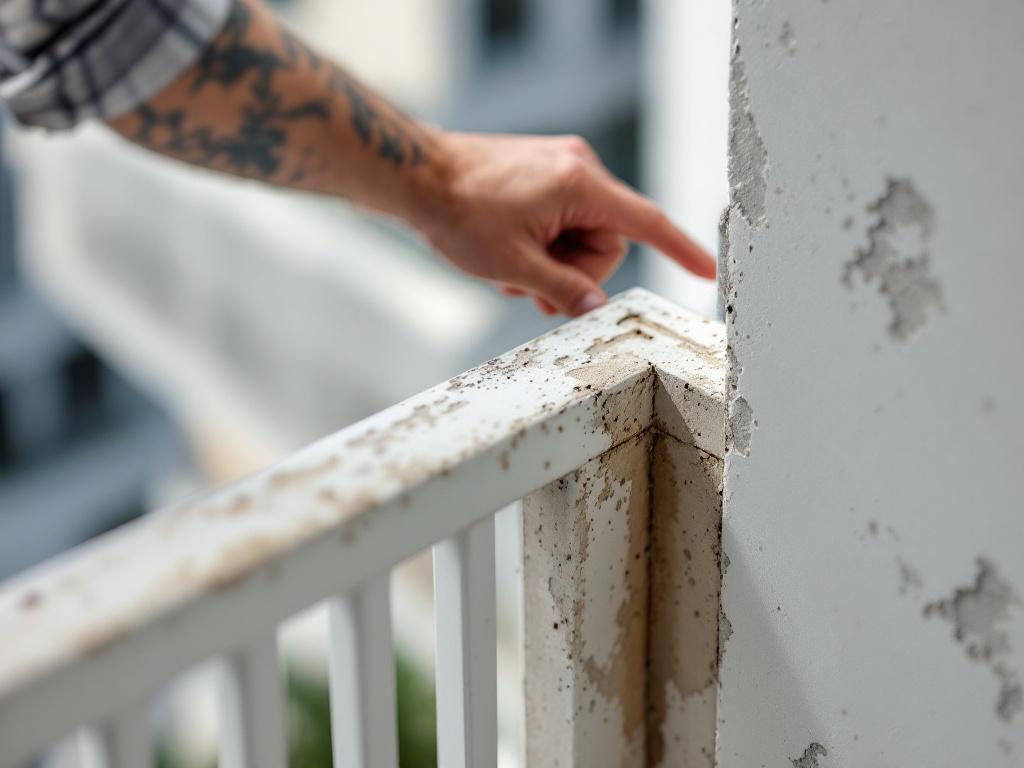
The unit-level walkthrough breaks into six specific checks:
Sliding glass doors and impact windows. Test every track. Impact windows carry a 30–40 year useful life per Association Reserves' component tables. Replacement runs $15,000–$40,000 per unit depending on opening count and size. Original 1990s sliders in a coastal building mean you should budget for replacement within your hold period.
Balcony and railing condition. Look for spalling concrete, rust streaks from rebar, and loose railings. Concrete restoration cycles run 25–40 years. Visible spalling means the building is approaching a major reserve event, which feeds back into the assessment analysis from the previous section.
HVAC age and condition. Check the manufacturer date plate. Coastal air corrodes condenser coils in 8–12 years. A 15-year-old unit is a $6,000–$9,000 replacement on a near-term horizon.
Plumbing under sinks and at the water heater. Look for green corrosion at copper fittings, water staining, or recent patches. Original galvanized plumbing in pre-1980 buildings is at or beyond end of life, and replacement in a high-rise often requires through-wall access — meaning drywall repair and tile work add to the line item.
Electrical panel. Federal Pacific and Zinsco panels are insurance disqualifiers in Florida. Re-panel cost runs $2,500–$5,000. If you can't get coverage on the unit, you can't close — verify panel make and model before you commit.
Bathroom and kitchen caulking, grout, and tile. Failed caulking around tubs and showers in a high-rise means water has been migrating to the unit below. That's a liability that surfaces either at closing through the seller's disclosure or after closing through a neighbor's claim. Look for fresh sealant in suspicious patterns.
Pair the physical walkthrough with a binary go/no-go framework. The table below converts the previous sections' diligence into a decision filter:
| Proceed if... | Walk away if... |
|---|---|
| Milestone inspection complete, no critical findings | Milestone overdue or findings unaddressed |
| Reserves at 50%+ of fully-funded balance | Reserves below 30% with components past useful life |
| No assessment pending; HOA up under 8% annually | Assessment > $10K/unit pending or HOA up 20%+ |
| Building DOM within 20% of city median | Building DOM 50%+ above city median |
| Fannie Mae eligible | On Fannie Mae ineligible projects list |
| Insurance fully placed, premium under 30% of budget | Insurance gaps or premium > 35% of budget |
The framework is not a guarantee. It's a filter that removes the buildings most likely to deliver an unpleasant surprise in years two through five — the window when most condo buyers underestimate their carrying-cost exposure. Buildings that survive the filter still require judgment about location, view, unit specifics, and your personal hold horizon. But the financial-trajectory work is done, and that's the work that separates a defensible purchase from an expensive lesson in the current generation of condos for sale fort lauderdale.