
Florida Condo Buying Guide: Best Markets and What to Know Before You Buy
Florida Condos for Sale: What the Listing Doesn't Tell You
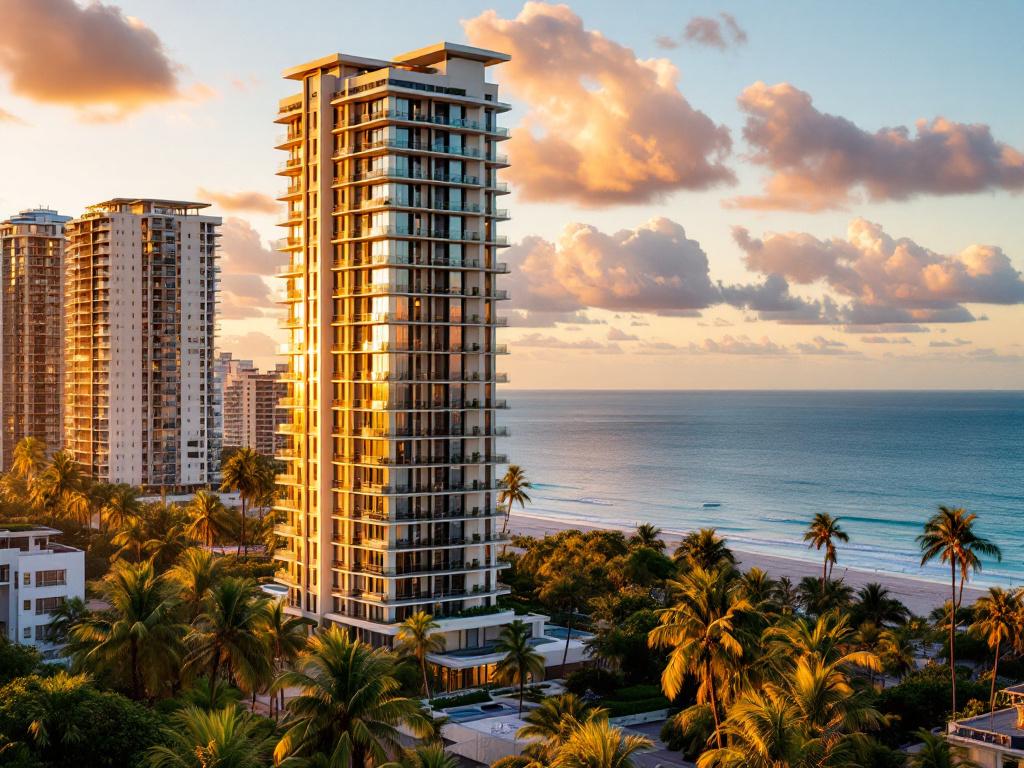
Florida's condo market in 2025 rewards informed buyers and punishes uninformed ones.
You're sitting at the kitchen table with a stack of HOA documents, wondering whether the $400 monthly fee on the listing will be $600 by next year. Or you're toggling between two browser tabs — a Miami Beach two-bedroom and a Tampa unit at the same price — trying to figure out which one actually appreciates over the next decade. Or you're asking the harder question: does a condo even fit your timeline, or are you about to lock yourself into a structure designed for a buyer profile that isn't yours?
The market for florida condos for sale has changed materially since 2022. After the Surfside collapse and the passage of Senate Bill 4-D — Florida's structural reserve-funding law — older buildings are repricing. According to real estate buying platform RealPha, select older-building markets across the state have absorbed price declines of 5–12% as associations confront long-deferred reserve obligations. Independent South Florida analyst Peter Zalewski tracks this dynamic weekly through his Miami Condo Cliff Index™, and the data confirms what diligent buyers already suspect: not all Florida condos are pricing on the same trajectory.
This guide identifies which Florida markets reward buyers in 2025–2026, flags the costs that don't appear on listing sheets, and walks you through exactly what to scrutinize before you sign. bocabanyan operates daily in the Boca Raton condo market and reads HOA financials line-by-line. What follows is operator-level guidance — the same diligence framework applied to your search. If you're focused specifically on the South Florida segment, the Boca Raton Condo Buyer's Guide goes deeper on hyperlocal building-by-building dynamics.
Table of Contents
- Where Florida Condo Buyers Find Value in 2025
- The Six Hidden Costs That Reshape Your Florida Condo Budget
- Reading the Condo Association's Books: Eight Red Flags Before You Sign
- Condo or Single-Family Home in Florida: A Side-by-Side Read
- Beachfront, Downtown, or Suburban: How Location Reshapes Your Investment
- Fifteen Actions to Complete Before You Make an Offer
Where Florida Condo Buyers Find Value in 2025: A Market-by-Market Read
Florida is not one market. South Florida (Miami-Dade, Broward, Palm Beach) operates on different fundamentals than the Gulf Coast (Tampa, Naples, Cape Coral), and both diverge from Central Florida (Orlando). Insurance costs vary by an order of magnitude between coastal and inland zip codes. HOA fee trajectories track building age and reserve status more than metro averages. Appreciation patterns split between buildings constructed before and after current code. A buyer who ignores these distinctions and buys "Florida" as a monolith ends up paying coastal premiums for inland-quality fundamentals — or vice versa.
| Market | Median Price | YoY Movement | Inventory Signal | Notable Risk |
|---|---|---|---|---|
| Tampa Bay | $431,000 | +5.1% | ~5.4 months | Hurricane exposure |
| Orlando | Mid-range | +3% | Moderate | Tourist-rental saturation |
| Naples / Cape Coral | Higher | Softening | Rising | Coastal insurance |
| South FL (older buildings) | Variable | -5% to -12% | Rising | SB 4-D assessments |
| South FL (newer buildings) | Premium | Holding | Tight | HOA fee trajectory |
Tampa Bay and Orlando data from GoldCoastSchools market analysis. South Florida repricing data from RealPha. Investment-yield references in the analysis below are sourced from Mashvisor, an investment-analytics platform — directional, not authoritative.
Florida is not one condo market. The same $500,000 buys a repricing older Miami unit, a stable Tampa Bay two-bedroom, or a softening Naples high-rise — and each carries a different five-year outlook.
Tampa Bay currently reads as the growth-with-stability pick. A median price near $431,000, year-over-year appreciation of +5.1%, and inventory hovering around 5.4 months mark a market that's neither overheated nor stalling. Buyers entering Tampa today face hurricane exposure as the primary structural risk, but the building stock is generally newer than South Florida's, and HOA fee escalation has been less violent than in coastal Miami-Dade.
Orlando moves slower — +3% YoY with moderate inventory — and that slowness is the feature, not the bug. The metro's economy diversified beyond pure tourism over the last decade, and condo demand correlates more closely with corporate relocation and university growth than with seasonal vacation flow. According to RealPha, Orlando rental yields land in the 5–8% band for buyers willing to navigate HOA short-term-rental rules.
Naples and Cape Coral have shifted buyer-favorable. Prices are softening and inventory is climbing — a combination that rewards patient capital. Mashvisor (treat as a vendor analytics source) reports Bonita Springs cash-on-cash returns near 4.04% at a median around $796,000. The headline risk here is coastal insurance, which for many buildings has tripled premiums since 2020.
South Florida is bifurcating. Post–SB 4-D, older buildings — typically pre-2000 construction — are repricing down 5–12% as reserve assessments hit owners. Newer, fully-funded buildings hold value or appreciate. Mashvisor pegs North Miami at roughly 4.05% cash-on-cash returns at a $756,000 median. If you're buying for primary residence in the next 12 months, Tampa Bay and Orlando offer the cleanest entry. If you're buying South Florida, restrict your search to post-2000 construction with documented reserve funding. For broader Boca Raton real estate market context, the South Florida bifurcation pattern shows up most clearly in Boca's east-of-I-95 inventory.
The Six Hidden Costs That Reshape Your Florida Condo Budget
Your monthly mortgage payment is the smallest part of owning a Florida condo. The line items below routinely add 30–50% to a buyer's expected monthly cost — and most do not appear in the listing. The buyers who get surprised in year two are the ones who underwrote the listing, not the building.
1. Special Assessments (the post–SB 4-D reality). Florida's Senate Bill 4-D requires condo associations to fund structural reserves based on findings from milestone inspections. Buildings that deferred inspections and underfunded reserves for years are now passing assessments to owners — often $10,000 to $100,000+ per unit, sometimes more for oceanfront mid-rises with major façade or concrete restoration needs. According to RealPha, this dynamic is the direct cause of the 5–12% price decline in older South Florida buildings. Before you offer, ask for the most recent two-year assessment history and any pending board votes on future assessments.
2. HOA Fee Escalation. HOA fees in Florida coastal markets have risen meaningfully year-over-year as insurance premiums and reserve mandates increased. The exact rate of escalation varies by building, region, and master policy structure — anyone quoting you a single statewide percentage is selling something. The right question is not "what's the average fee increase?" but "what was THIS building's fee five years ago, and what's the projected trajectory?" Request the 5-year fee history in writing. A fee that has doubled in five years signals the building is repricing its operating costs in real time.
3. Condo Insurance (the HO-6 policy). This is your individual unit policy, distinct from the association's master policy. It covers your interior walls inward, personal property, and loss assessment coverage (which protects you when the master policy falls short and the association assesses owners). Florida HO-6 premiums sit materially above national averages because of wind and flood exposure. Get a written quote before you make an offer, not after. Buyers who assume "insurance is insurance" frequently discover the actual annual premium changes their monthly carrying cost by hundreds of dollars.
4. Flood Insurance. Your FEMA flood zone determines whether flood coverage is mandatory (Zones AE, VE) or optional (Zone X). Coastal Florida buildings are typically in mandatory zones. National Flood Insurance Program (NFIP) policies cap at $250,000 for building coverage and $100,000 for contents — meaning if your condo's replacement cost exceeds the cap, you'll need supplemental private coverage. Pull the FEMA flood determination on any specific unit before your inspection period closes.
5. Property Taxes Without Homestead. Florida's homestead exemption removes up to $50,000 from assessed value and caps annual assessment increases at 3% under Save Our Homes. Non-primary residences — second homes, vacation properties, investment units — receive neither benefit. Tax bills on non-homesteaded condos can run 30–60% higher than homesteaded equivalents in the same building. If you're buying as a snowbird or investor, model your taxes at the non-homestead rate from day one.
6. Rental Restrictions That Suppress Resale. Many Florida condo associations restrict rentals to minimum 6-month or 12-month leases, prohibit short-term rentals entirely, or cap the percentage of rented units in the building. These rules directly affect resale value to investor buyers and short-term-rental purchasers — narrowing your future buyer pool. They also affect your own optionality if your plans change. Read the declaration before you offer, not after closing. If long-term rental is part of your strategy, professional Boca Raton property management can help you confirm the building's rules align with your hold thesis.
Reading the Condo Association's Books: Eight Red Flags Before You Sign

The numbers that matter sit on pages most buyers skip.
Before you make an offer on any Florida condo, you have the legal right to request the association's financial documents. Most buyers skim them. Senior advisors read them line-by-line and translate the numbers into questions for the listing agent. Below are the eight signals that should change your offer price — or kill the deal entirely. Treat this as a working checklist, not background reading.
1. Reserve Fund Funding Ratio. Confirm the reserves cover at least 70% of the structural integrity reserve study (SIRS) recommendation. Below 70% is a yellow flag that warrants offer renegotiation. Below 50% means you should expect a special assessment within 5–10 years — and you should price that into your offer or walk. Ask for the SIRS document directly; don't accept a verbal summary.
2. Special Assessment History (last 5 years). Request the meeting minutes and assessment ledger going back five years. Multiple assessments — or a single recent large one — signal that deferred maintenance has caught up with the building. Pay particular attention to whether assessments were tied to milestone inspection findings versus discretionary upgrades.
A reserve fund below 70% is a yellow flag. Below 50% is a siren — and you will pay for that shortfall, one way or another, within ten years.
3. Delinquency Rate. What percentage of unit owners are behind on dues? Above 10% strains the operating budget. Above 15% can directly affect your mortgage approval — Fannie Mae and Freddie Mac flag high-delinquency buildings as ineligible for conventional financing. If you're using a conventional loan and the building has a 20% delinquency rate, your financing falls through. Confirm this number before you offer, not at underwriting.
4. Pending Litigation. Lawsuits against the association — by owners, contractors, or insurers — drain reserves and frequently trigger insurance non-renewal. Any active litigation requires a legal review before you offer. Ask for a written disclosure of all pending claims; if the association resists or hedges, treat that resistance as data.
5. Insurance Claim Patterns. Repeated claims for water intrusion, roof damage, or wind events raise master policy premiums and signal building condition issues that haven't been addressed. Three or more major claims in five years means you're buying into a building with chronic envelope or system problems. Request the master policy declarations page and the claims history.
6. Milestone Inspection Status (SB 4-D). Florida buildings 30+ years old (or 25+ in coastal counties) must complete milestone inspections under Senate Bill 4-D. Confirm the building has passed and that the SIRS is current. A building that has not completed its milestone inspection by the statutory deadline is a building you do not buy until it has.
7. Master Insurance Coverage Gap. Verify coverage limits on wind, flood, and liability. Underinsured buildings transfer risk directly to unit owners through assessments after a loss event. A category-3 hurricane on an underinsured building can produce a six-figure assessment per unit. Compare the master policy's wind coverage to the building's replacement cost — gaps here are your gaps.
8. Rental Cap Status. Confirm the percentage of currently rented units. FHA financing requires owner-occupancy ratios above 50% for approval. If the building is at 60% rentals, FHA buyers cannot qualify — which both restricts your financing options and your future resale buyer pool. This single number can swing the value of a unit by tens of thousands of dollars.
Request these documents in writing through your agent. If the association resists, walk. Transparent associations send full financials within 72 hours; resistance is itself a red flag. Document everything — the diligence file you build now is the same file you'll use when selling your Boca Raton home later, and clean records compress your future timeline materially.
Condo or Single-Family Home in Florida: A Side-by-Side Read
The condo-vs-house question is not about price. It's about timeline, risk tolerance, and lifestyle. A buyer with a 5-year horizon and travel-heavy work patterns has a fundamentally different answer than a 20-year owner planning to raise a family. The right structure depends on what you actually need the asset to do — store wealth, generate yield, support a lifestyle, or some combination — and over what time frame.
| Factor | Florida Condo | Florida Single-Family Home |
|---|---|---|
| Typical Entry Price | Lower | Higher |
| Monthly Carrying Cost | Mortgage + HOA + HO-6 | Mortgage + insurance + maintenance reserve |
| Exterior Maintenance | Association handles | Owner handles |
| Hurricane Prep | Association manages building | Full owner responsibility |
| Appreciation Pattern | Tied to building + association health | Tied to land + neighborhood |
| Resale Buyer Pool | Narrower | Broader |
| Rental Flexibility | Often HOA-restricted | Generally unrestricted |
| Insurance Structure | HO-6 + master policy assessment risk | Single owner-held HO-3 |
Upfront costs favor condos at the entry level. A two-bedroom condo in most Florida metros opens at a lower price point than a comparable single-family home in the same zip code. Closing costs as a percentage of price are similar — title, doc stamps, recording, inspection — but the smaller principal makes condos accessible to first-time and lower-budget buyers.
Ongoing costs are where the math gets nuanced. Condos add HOA fees but remove almost all exterior maintenance — no roof replacement reserve, no lawn service, no pool upkeep, no individual hurricane shutter installation. Single-family homeowners avoid HOA fees but absorb the full maintenance burden, which most financial advisors model at 1–2% of home value annually. Run both scenarios with realistic numbers; the breakeven is not always where buyers assume.
Appreciation patterns diverge. Single-family homes in Florida have historically appreciated faster than condos over 10-year horizons in many markets, though the gap varies meaningfully by metro and building age. Condo appreciation is heavily dependent on building condition and association financial health — a well-funded post-2000 building in a strong location can outperform single-family homes in nearby neighborhoods, while an underfunded older building can underperform meaningfully.
Maintenance burden is the lifestyle differential. A condo owner who travels six months a year locks the door and leaves; the association handles storms, landscaping, and common-area issues. A single-family owner needs a property manager, neighbor, or service provider for the same outcome. Resale demand favors single-family homes — broader buyer pools, fewer financing restrictions, no master policy or HOA litigation risk to disclose.
Choose a condo if your horizon is under 7 years, you travel often, you value lock-and-leave simplicity, or you want exposure to urban or beachfront locations at lower entry prices. Choose a single-family home if your horizon is 10+ years, you want maximum control over the asset, or you're prioritizing appreciation and resale flexibility. If you're leaning toward the single-family side of this question, current Boca Raton homes for sale provide a useful pricing benchmark against the condo inventory in the same market.
Beachfront, Downtown, or Suburban: How Location Reshapes Your Florida Condo Investment
Beachfront Condos

Beachfront premium pricing comes with the highest insurance and corrosion costs in the state.
Beachfront pricing typically runs 30–50% above comparable inland units in the same metro. Insurance costs are highest here — HO-6 plus mandatory NFIP flood coverage, often supplemented with private wind policies for replacement-cost gaps. Seasonal rental demand is strongest at the beach, but check HOA short-term-rental rules carefully: most beachfront associations restrict rentals to 1-month or 3-month minimums, and many prohibit weekly rentals entirely. The lifestyle trade-offs are real — salt corrosion shortens HVAC and exterior fixture life by 30–50% versus inland, hurricane evacuation is a non-negotiable seasonal reality, and parking is constrained in older mid-rises. Best fit: buyers prioritizing lifestyle over yield, or seasonal residents with flexible timeline who can absorb the carrying-cost premium for direct ocean access.
Urban Core Condos — Miami, Tampa, Orlando, Fort Lauderdale
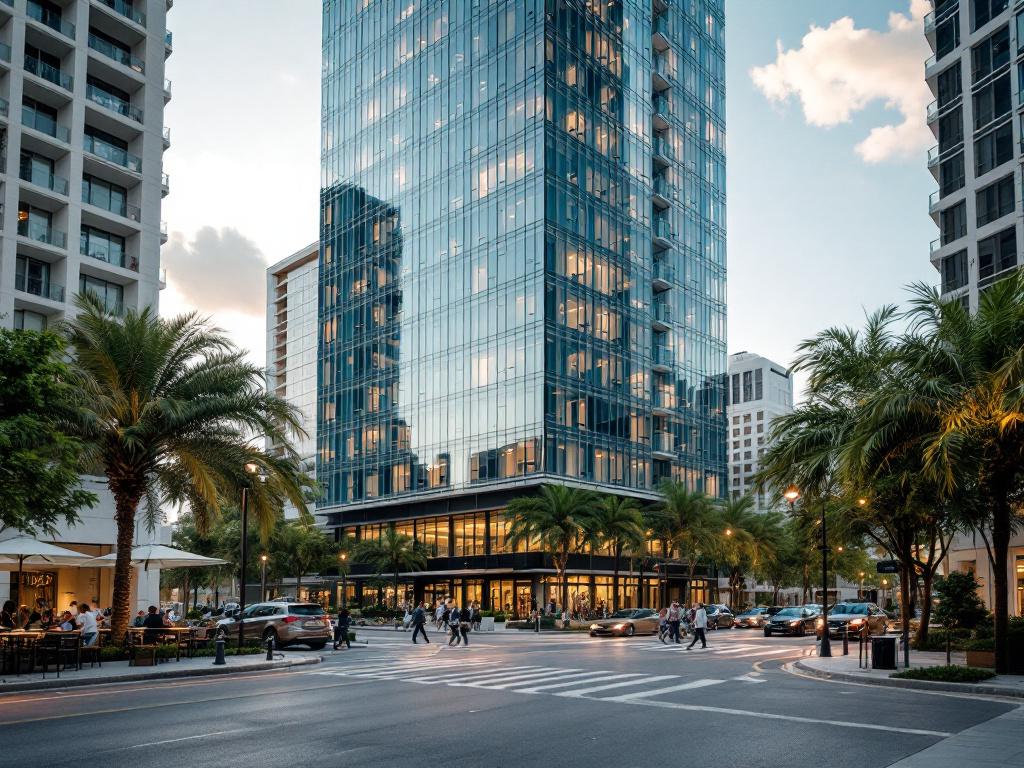
Urban-core condos draw younger buyers and command rental premiums where HOA rules allow.
Walkability and nightlife drive premium pricing in Florida's urban cores. Younger buyer concentration favors buildings with gym, coworking, rooftop amenities, and pet policies designed for city dwellers. Appreciation drivers here are corporate relocations, transit investment, and mixed-use development — Tampa's downtown and Miami's Brickell corridor have both benefited substantially from financial-sector relocation since 2020. According to investment-platform Mashvisor — which functions as analytics software, not independent research — North Miami sits at roughly 4.05% cash-on-cash return at a $756,000 median price point. Rental income potential is higher than suburban equivalents, but HOA rental caps frequently apply and FHA owner-occupancy thresholds become a factor in highly-rented buildings. Best fit: buyers prioritizing growth and rental yield with a 7–10 year horizon. Boca Raton occupies an interesting hybrid position — coastal access plus urban amenities at a different scale than Miami or Tampa cores.
Suburban Florida Condos
Affordability is the suburban headline. Entry pricing typically runs 25–40% below comparable urban units in the same metro region. Family amenities — pools, playgrounds, low-rise garden-style layouts — dominate the building stock. Appreciation tends to be slower but with lower volatility through market cycles. Commutes lengthen if you're working in the city core, which has become less of a constraint in remote-friendly industries but remains a daily reality for service, healthcare, and trade workers. HOA fees in suburban buildings typically sit lower than urban or beachfront equivalents — often a function of fewer amenities, lower insurance premiums, and lower master policy complexity — though specific figures vary substantially by building age and reserve status. Best fit: families, retirees prioritizing space, or buyers seeking lower carrying cost without coastal-insurance exposure. Beyond Boca, alternative Florida markets like Stuart, Florida on the Treasure Coast and Ocala real estate in the central horse-country corridor offer suburban pricing with very different lifestyle profiles.
Fifteen Actions to Complete Before You Make an Offer on a Florida Condo
If you've read this far, you know what to look for. Here's the sequence to execute it. Phase 1 is financial preparation — done before you tour. Phase 2 is diligence on the specific building — done between tour and offer. Phase 3 is final verification — done between offer acceptance and closing.
Phase 1 — Financial Preparation
1. Get pre-approved with a Florida-condo-experienced lender. Some Florida condos are non-warrantable — rejected by Fannie Mae and Freddie Mac due to delinquency rates above 15%, active litigation, or owner-occupancy ratios below 50%. A lender unfamiliar with Florida condo eligibility will issue you a pre-approval that collapses at underwriting. Confirm your lender has closed at least 50 Florida condo transactions in the last two years.
2. Build a closing-cost reserve of 3–5% of purchase price. Title insurance, Florida documentary stamp tax, recording fees, inspection costs, and lender fees compound quickly. A $500,000 condo typically requires roughly $15,000–$25,000 in closing costs above the down payment.
3. Build an HOA reserve buffer. Hold 6 months of HOA fees in a separate liquid account. If a special assessment hits in year one — a real possibility in older South Florida buildings — this buffer prevents the surprise from becoming a financial crisis.
4. Pull and review your credit report. Resolve disputes before any lender hard pull. Florida condo financing is more sensitive to credit anomalies than single-family home financing because the underlying collateral involves the association's risk profile in addition to your own.
5. Decide homestead vs. non-homestead intent. This determines your tax bill (homestead saves up to $50,000 off assessed value plus the 3% Save Our Homes cap), your insurance structure, and your financing terms. Non-homesteaded buyers often qualify for different loan products.
Phase 2 — Due Diligence on the Specific Building
6. Request the association's full financials. Demand the operating budget, reserve study (SIRS), last two years of board meeting minutes, master insurance declarations page, current delinquency report, and full special assessment history. A response time longer than 72 hours signals a problem.
7. Verify milestone inspection status and SIRS funding. For any building 30+ years old (25+ coastal), confirm the milestone inspection is complete and passed. Confirm the SIRS funding ratio against the recommended reserve level — ideally above 70%.
8. Hire a licensed Florida home inspector. Interior of the unit plus visible inspection of common elements you can access — roof access if available, mechanical rooms, exterior envelope. A good inspector catches what the association's own consultants softened.
9. Pull the FEMA flood zone determination. Get an HO-6 quote and a flood insurance quote in writing before your inspection period closes. Premium surprises kill deals at this stage; the time to discover them is before financing contingencies expire.
10. Review the declaration and bylaws. Read for rental restrictions, pet rules, renovation approval requirements, parking allocations, and any unusual covenants. The declaration governs you for the duration of your ownership — it's a contract, and you should know its terms before signing.
11. Search for pending litigation. Run a county court records search on the association name. Active litigation is a disclosure obligation but associations sometimes interpret "pending" narrowly. Verify independently.
Phase 3 — Final Verification Before Closing
12. Order title search and title insurance. Florida title insurance is owner's policy plus lender's policy. Confirm both are ordered and the title search has cleared.
13. Confirm board approval if required. Some Florida associations have right of first refusal or applicant approval rights. The board approval process can take 2–4 weeks; build it into your closing timeline rather than discovering it the week of closing.
14. Conduct final walk-through within 48 hours of closing. Verify condition has not changed since inspection, confirm all included fixtures and appliances are present, and check that any negotiated repairs were completed.
15. Review the closing disclosure line-by-line. Compare it against your loan estimate. Flag any item that increased materially — origination fees, title charges, prepaid items. Lenders are required to honor most original estimates within tolerance, and corrections are routine when caught at the closing table.
Print this list. Bring it to your agent. If your agent cannot execute these fifteen steps confidently, you have the wrong agent. The buyers who skip this work are the ones writing cautionary stories on Reddit two years later. The buyers who complete it close cleanly and sleep at night. To benchmark your search against current inventory, view current listings and apply this framework to anything you're considering.