
Hidden Gem: Why Palatka, Florida is Your Next Real Estate Investment Opportunity
Palatka Florida Homes for Sale: The Investor's Field Guide to a Lagging Market
You've been scrolling Florida MLS feeds for three months. Tampa suburbs are pushing $420K for a 1,400-square-foot ranch built in 1978. Jacksonville's St. Johns County sits over $500K. Then you land on a fully renovated 1920s riverside Victorian in Palatka, listed at $185K, three blocks from the St. Johns River. Your first reaction is suspicion. The second reaction — the one most investors never get to — is the spreadsheet.
This is not a "hidden gem" pitch. What follows is a structured walkthrough of why Palatka Florida homes for sale sit at the prices they do, what your $150K–$300K actually buys on the ground, which of three investment archetypes fits your capital and timeline, and the exact due diligence sequence that separates a smart entry from a stuck asset. The data has moved faster than the listings have. Whether that gap is opportunity or warning depends entirely on the discipline you bring to it.
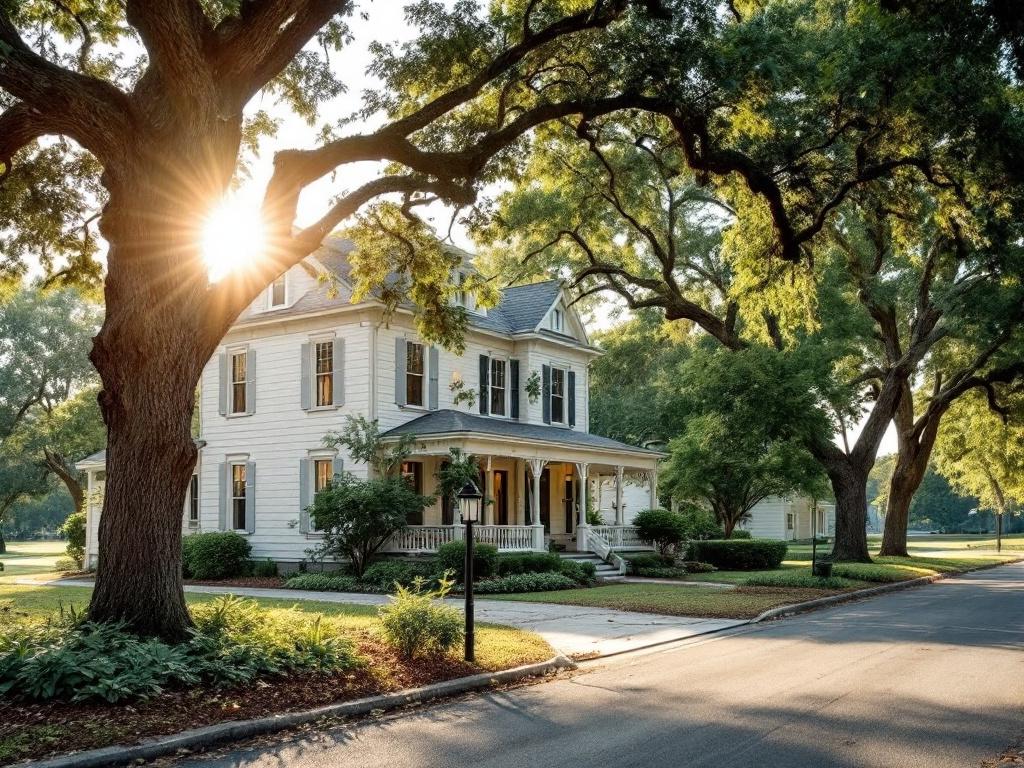
Table of Contents
- The Pricing Paradox
- What $150K–$300K Actually Buys
- The Three Investment Archetypes
- The Five Numbers You Pull Before You Write an Offer
- Where Palatka Deals Go Wrong
- The Palatka Offer-Ready Worksheet
The Pricing Paradox — Why Palatka Stays Undervalued While Coastal Florida Inflates
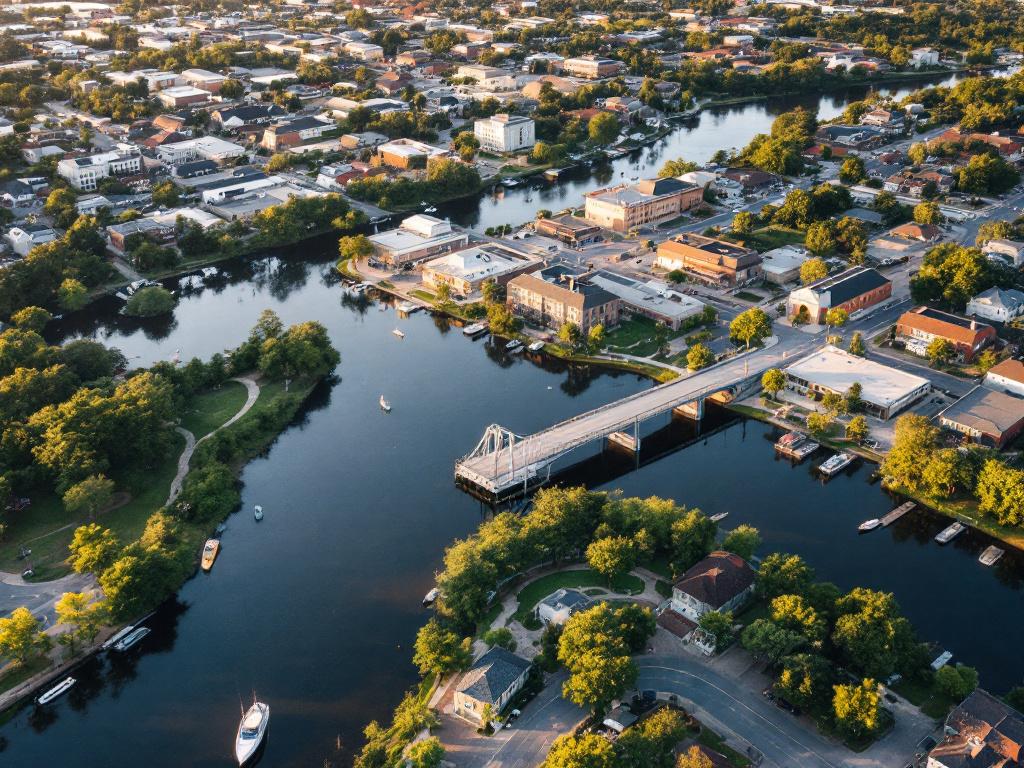
Palatka sits roughly 60 miles south of Jacksonville and 60 miles northwest of Daytona Beach, on the west bank of the St. Johns River, in Putnam County. It is not a destination market. It is a pass-through market — drivers headed from I-95 to Gainesville cross the Memorial Bridge, glance at the river, and keep going. That geography is the first mechanic suppressing prices, and understanding it is the entry point to understanding everything else about Palatka real estate.
Four mechanisms compound to keep this market priced below what comparable inventory commands elsewhere in the state.
Geographic positioning psychology. Coastal Florida — the oceanfront strip from Jacksonville to Miami and back up the Gulf — commands a premium that has nothing to do with construction quality, lot size, or weather resilience. It has to do with search behavior. Buyers type "Florida beach home" into Zillow. They do not type "Florida inland riverfront." Yet Palatka sits on a navigable section of the St. Johns, with deep-water access, far less hurricane storm-surge exposure than coastal property, and historic homes on lots that would cost five times as much in St. Augustine. According to Ben Bates, comparable Jacksonville and Orlando-area homes run $400K–$450K versus Palatka's $150K–$250K range — a 30–50% inland discount on similar square footage. That gap is not a reflection of quality. It is a reflection of search funnels. Investors evaluating premium coastal counterparts can compare directly with Boca Raton real estate to see exactly how much of the price gap is geography versus construction.
The 10-year appreciation lag. Palatka home values have appreciated approximately 136.66% over the last decade, roughly 9% annualized, according to Ark7. That is a strong number — stronger than the national average over the same window. But it is compressed into a low absolute price base. A 9% gain on a $150K home is $13,500. The same percentage on a Tampa home is $40,000. Algorithm-driven attention follows the dollar figures, not the percentages. The market has been moving without the headline numbers catching investor attention.
Population trajectory reversal. Palatka declined from 2010 through 2015, then began growing again from 2016 onward, according to Paces Funding (note: vendor source — investors should cross-reference current U.S. Census ACS 5-year estimates for confirmation). The directional point matters more than any single year's figure: this is a market with returning population but lagging price recognition. Markets that stop bleeding residents and start gaining them tend to see price catch-up over a 5–10 year window. School district ratings shape valuations the same way in any Florida market — the same dynamic explored in understanding the impact of school districts on real estate prices — and Palatka's downtown school zone is where investor and family interest are converging fastest.
Carrying cost differential. Property taxes in Palatka run roughly $1,500/year on a typical home versus approximately $3,000/year in Orlando, per Ben Bates. That gap — about $1,500 annually, or roughly $125/month — is the difference between break-even and positive cash flow on a marginal rental property. Lower carry cost extends investor holding tolerance, which is a structural advantage that compounds. A long-hold investor who can absorb a flat year without bleeding equity makes different decisions than one paying Orlando-level taxes on a comparable asset.
The strategic read: undervaluation here is structural lag, not structural defect. The buyer pool has not caught up to the data. One forward analyst (Ben Bates, single source — present this as one analyst's view rather than consensus) projects 5–8% annual appreciation through 2030. If that projection holds, today's Palatka Florida homes for sale at $200K become $290K–$340K assets by 2030. If it does not hold, the carrying cost is low enough that patient capital still survives the wait. That asymmetry — moderate upside, contained downside — is what makes this market worth the analytical effort.
Palatka's undervaluation is a lag, not a flaw. Every emerging market has a window where the data has already moved but the price hasn't. That window is exactly where investor returns live.
What $150K–$300K Actually Buys — Palatka Neighborhood-by-Neighborhood Inventory
At the time of writing, Palatka has approximately 289 total homes listed and 7 properties tagged as investment-specific across the major aggregators, per Redfin and Trulia. Average days on market sits at 79 days, per Redfin. That figure alone tells you this is not a market where you bid over asking on day one. It is a market where careful buyers can negotiate.
The inventory breaks down across four functional zones, each with its own price band, housing stock, and buyer profile.
| Neighborhood | Typical Price Range | Predominant Stock | Primary Buyer Profile |
|---|---|---|---|
| Downtown / Historic District | $150K–$220K | Pre-1940 Victorians, bungalows | Restoration buyers, flippers |
| Riverfront (St. Johns-adjacent) | $200K–$300K+ | Mid-century to modern, mixed | Second-home, retirees |
| West Palatka | $130K–$190K | 1960s–1990s ranch, mixed use | Rental investors, first-time buyers |
| North Palatka / County edges | $140K–$210K | Manufactured, ranch, larger lots | Long-hold investors, owner-occupants |
The 79-day DOM figure is a citywide Redfin average. Neighborhood-level granularity is not available in standardized listing data — investors should pull MLS-direct DOM at the neighborhood level during active diligence, since Riverfront and Historic District inventory often moves on different cycles than West Palatka rental stock.
Downtown and Historic District inventory turns on restoration appetite. Buyers entering at $150K–$220K typically plan $40K–$80K in renovation, exiting at $280K–$340K. The math is tight but workable for experienced flippers. The risk is concentrated in mechanical systems on pre-1940 stock — more on this in Section 5.
Riverfront is the slowest-moving but highest-ceiling segment. The buyer pool is largely non-local: second-home buyers and retirees from Jacksonville, Atlanta, and the Northeast looking for water access at a fraction of coastal pricing. Riverside properties Palatka investors target here are usually playing the long-hold game, not the flip — exit liquidity is too inconsistent for short-cycle plays.
West Palatka is the rental investor's quiet zone. Lower entry, faster cash-flow stabilization, less competition from owner-occupants who tend to favor the Historic District for character. The 1960s–1990s ranch stock is mechanically simpler than the Victorians: standard slab construction, modern electrical, fewer systems-level surprises in inspection.
North Palatka and the county edges are where larger-lot opportunities live. Manufactured home inventory pulls the price band down; ranch and acreage properties pull it up. Long-hold investors who want optionality on subdivision or future development concentrate here.
A note on the "investment property" tag: the 7-property count on Redfin understates actual investment property Palatka opportunity by an order of magnitude. Most flips and rentals are sourced from general inventory, not specifically tagged listings. Filtering only for the tagged subset will cut you off from the bulk of the deal flow. The same principle applies in any market — when reviewing active listings inventory anywhere in Florida, the tagged investment subset is rarely where the best deals live.
The Three Investment Archetypes — Match Your Capital to the Right Palatka Play
The most common mistake investors make in emerging markets is choosing a strategy based on the capital they have rather than the market environment they're entering. A $50K renovation budget does not automatically make you a flipper. A 30-year mortgage does not automatically make you a long-hold investor. The market sets the tempo. Your capital fits into it, or it doesn't.
Palatka in its current phase rewards three distinct archetypes differently. Match yourself to the right one before you tour a single property.
The Flip Play (The Victorian Restorer): $130K–$180K acquisition, $40K–$80K renovation, 12–18 month hold, target exit $280K–$340K. Concentrated in the Historic District. Requires hands-on contractor management and a stomach for systems-level surprises in pre-1940 housing.
The Rental Income Play (The Yield Builder): $180K–$250K stabilized property, focused on West Palatka or stable residential pockets. Year-round tenant base. Requires property management infrastructure and tenant screening discipline. Out-of-area investors should evaluate remote property management capacity before they sign a contract.
The Long-Hold Appreciation Play (The Patient Capital): $200K–$300K in Riverfront or Historic District, 5–10 year horizon. Thesis bet on inland Florida price catch-up at the projected 5–8% annual appreciation rate (Ben Bates projection — single source, treat as one analyst's view). Rental income covers carry along the way.
| Criterion | Flip Play | Rental Income | Long-Hold |
|---|---|---|---|
| Entry Price | $130K–$180K | $180K–$250K | $200K–$300K |
| Time Commitment | High (active) | Medium (cycle) | Low (passive) |
| Skills Required | Renovation, contractors | Tenant mgmt | Patience, reserves |
| Time Horizon | 12–18 months | 3–7 years | 5–10 years |
| Primary Risk | Reno overrun, exit | Vacancy, insurance | Macro shift |
With 79-day average DOM in the city, Palatka does not currently support fast flip cycles. Exit liquidity is the binding constraint, not entry pricing. If you renovate a Victorian to a $325K finished value and the market gives you a 90-day marketing window, you've absorbed nine months of carry on top of the renovation timeline. The Flip Play works only for investors with renovation experience and the patience to hold through a slower marketing window than they'd see in Jacksonville or Tampa. If that math breaks under a 6-month sale assumption, the deal is too tight for this market.
The Rental Income Play is the cleanest fit for Palatka's current phase. Carrying costs are low — about $125/month less in property taxes than a comparable Orlando rental, which is the difference between marginal and meaningful cash flow on a $200K property. The constraint is local property management capacity. Palatka has a smaller licensed property management base than metro Florida markets, and remote investors managing from South Florida or out of state need to vet management firms before they have a property under contract, not after. Rental yield benchmarks specific to Palatka are not standardized in widely available data — investors should pull rent comps from Zillow Rent Estimate and Rentometer for any specific target property and validate against at least three local comparables. The same comp-validation discipline applies when selling a home in any Florida market — pricing is set by verified comparables, not by listing-site estimates.
The Long-Hold Play is a thesis bet on a single small market. If the projected 5–8% annual appreciation through 2030 holds, a $250K Riverfront entry today becomes a roughly $370K–$430K asset by 2030, with rental income covering carry along the way. The risk is concentration: a single small-market thesis means you have no diversification within the position. Investors should size this play so they can absorb a 3-year flat market without forced sale. If the position requires the appreciation to materialize on schedule to avoid distress, it is too large.
The mistake investors make is choosing a strategy by the capital they have, not by the market they're entering. Palatka right now rewards patient money over speed plays — the data is moving faster than the listings are.
The Five Numbers You Pull Before You Write an Offer on Any Palatka Home
No deal moves forward until these five numbers are known. This is the pre-offer data set. If you find yourself emotionally committed to a property before you've pulled them, you have already lost analytical objectivity — back away, run the numbers, then decide.
1. Price Per Square Foot vs. Local 5-Year Average and 50-Mile Radius
PPSF strips away square footage variance and lets you see whether you're inside or outside the local trend. Pull at least three Palatka comps within the last 12 months and three regional comps from Jacksonville's south suburbs, Gainesville, and Daytona inland. If your target is more than 10% above the local 5-year average without a clear renovation justification, it is likely overpriced regardless of how it looks in photos. Specific PPSF figures change month to month and should be pulled fresh from Redfin or Zillow for every property — do not rely on a number you used last quarter. The role of technology in modern real estate analysis has made this kind of comp-pulling fast enough that there is no excuse for skipping it.
2. Days on Market and List-to-Sale Ratio
This is your liquidity indicator. Palatka's average DOM sits at 79 days. A property sitting at 120+ days has either condition issues, pricing issues, or both. Either creates negotiating leverage if you can diagnose the actual problem. List-to-sale ratio under 95% indicates that buyers are routinely negotiating discounts in this segment. Ask the listing agent for the property's full listing history, not just the current cycle — properties that were withdrawn and relisted will show shorter DOM than the actual time on market would suggest.
3. Rent-to-Value Ratio (Rental Plays Only)
The 1% rule — monthly rent at or above 1% of purchase price — is a screening heuristic for inland Florida markets. A $200K Palatka home should generate $1,800–$2,000/month gross to clear the screen. Anything under $1,500 fails the screen for a stabilized rental and should only be pursued if there is a clear path to rent growth or value-add renovation. Pull rent comps from Rentometer or BiggerPockets rent comp data for the specific property type and neighborhood — citywide averages will mislead you on a property-by-property basis.
4. Flood Zone and Insurance Reality Check
Palatka has mixed FEMA flood zones because of its St. Johns River proximity. Insurance cost is the line item that can kill an otherwise clean deal in 24 months even if the entry numbers work today. Pull the FEMA Flood Map Service Center map for the exact address — the lookup is free at msc.fema.gov — and get an actual insurance quote, not an estimate, before the inspection contingency expires. Listing-site flood disclosures are unreliable; investors who skip the official FEMA lookup discover the issue at closing or, worse, six months in when the policy renews at double the original premium.
5. Property Tax Trajectory and Millage Rate
Palatka's $1,500/year typical tax bill is current. The trajectory matters more than the snapshot. Pull the last 5 years of millage rate data from the Putnam County Property Appraiser's office. A rising trajectory of more than 0.5 mills per year over five years is a yellow flag for any long-hold thesis — the carrying cost advantage that makes Palatka attractive can erode if the local tax base is being expanded faster than property values are rising. Stable or declining millage is the green-light signal.
Where Palatka Deals Go Wrong — Five Friction Points and How to Diagnose Them
These are the obstacles experienced investors hit. None of them disqualify the market. All of them require honest diagnosis before contract. Going in blind on any of these turns a strong thesis into a stuck asset.
Flood Insurance Cost Volatility, Not Just Flood Risk
The risk most buyers diligence is whether the property floods. The risk most buyers miss is whether insurance will be affordable in 24 months. Florida's private insurance market has been volatile statewide for the better part of a decade, and the National Flood Insurance Program is the backstop for many St. Johns River-adjacent homes. NFIP rates have been adjusting under the Risk Rating 2.0 methodology, which prices individual property risk more precisely than the legacy zone-based system did — meaning two homes in the same flood zone can carry meaningfully different premiums based on elevation, foundation type, and prior claims history.
Action: request the seller's last three years of insurance declarations pages, not just the current year. A $1,400 quote today that was $900 two years ago tells you the trajectory. Then get your own quote from at least two carriers, including a quote for what the policy will cost at next renewal under current rate filings, not just the assumable premium.
Older Home Mechanical Systems
Palatka's Historic District inventory is heavily pre-1940. HVAC systems older than 12 years, electrical panels with cloth wiring or fuse boxes (rather than modern breakers), and galvanized plumbing are normal findings on inspection — not exceptions. A clean cosmetic renovation does not mean a clean mechanical condition. Many flips in this market repaint and re-floor without addressing the systems underneath, which means the second buyer inherits a $30K–$50K mechanical liability that the listing photos do not show.
Action: budget renovation reserves at a minimum of 15% of purchase price on any pre-1960 property. Hire an inspector with documented experience in pre-war housing — generic Florida inspectors trained primarily on slab-built post-1980 construction routinely miss systems-level issues. Ask the inspector specifically about knob-and-tube wiring, galvanized supply lines, cast-iron drain stacks, and the age of the original HVAC ductwork.
Foundation and Moisture in Riverfront Inventory
Properties within a quarter-mile of the St. Johns River have elevated baseline moisture exposure. Crawl-space homes — common in pre-1960 stock throughout the Historic District and the riverfront pockets — require crawl-space inspection separate from the standard structural walkthrough. A general home inspector will note "moisture present" and move on. That note can mean anything from minor seasonal humidity to an active mold colony beneath the subfloor.
Action: insist on a separate crawl-space report from an inspector who will actually enter the crawl space, not photograph it from the access hatch. Mold remediation on a 2,000-square-foot Victorian routinely runs $8,000–$15,000 once the work is properly scoped, and that figure rises sharply if the subfloor itself is compromised. This is the single most common surprise expense in Palatka renovation projects according to investors active in the market.
Contractor Lead Times in a Small Market
Palatka has a meaningfully smaller licensed contractor base than Jacksonville or Orlando. Lead times for general contractors on full renovations can run 8–14 weeks just to start the project, plus the build itself. That math destroys flip projections that were modeled on Jacksonville-level contractor availability. You cannot evaluate the local service infrastructure of a small market by assumption — you have to call contractors and get committed start dates before you write the offer.
Action: line up your contractor relationships before you have a property under contract. Get verbal commitments on availability windows. Do not assume Jacksonville-based contractors will travel to Palatka — most will not for sub-$100K project budgets, and the ones who will charge a travel premium that erases your renovation margin. Build a stable of two general contractors, one electrician, one plumber, and one HVAC specialist who actually live within 30 miles before you become a buyer in this market.
Exit Liquidity in a Compressed Buyer Pool
With 79-day average DOM and a smaller buyer pool than metro markets, your exit window is structurally longer than what investors used to Tampa or Jacksonville cycles expect. In a downturn, that window extends. A property that would sell in 45 days in a strong Palatka market may sit for 180 days in a weak one. The buyer pool depth that absorbs inventory during slow periods in metro Florida does not exist here at the same scale. Deeper metro markets — the kind explored in the Boca Raton condo buyer's guide — absorb inventory during slow cycles in ways small markets simply cannot replicate.
Action: stress-test every deal against a 6-month sale timeline at 90% of target price. If the math still works under that assumption — meaning carrying costs, holding period, and discounted exit price still produce an acceptable return — you can absorb a slow market. If the math breaks under that test, the deal is too tight for Palatka regardless of how attractive the entry price looks.
The Palatka Offer-Ready Worksheet — Your Repeatable Deal-Evaluation System
This is the page you print, fill in for every property, and use to make the go/no-go call. No more emotional decisions. No more "the photos look great" deals. Investors building stabilized Florida real estate portfolios across multiple markets pair Palatka long-hold positions with assets in stronger metros — and the discipline that makes the multi-market portfolio work starts with a worksheet like this one applied identically to every target.
THE PALATKA DEAL WORKSHEET
1. Property Identification
- Address: ___
- MLS #: ___
- List Price: $___
- Square Footage: ___
- Year Built: ___
- Neighborhood: ___ (Downtown / Riverfront / West Palatka / North Palatka)
2. Investment Thesis (circle one)
- Flip Play — target exit $___ in __ months
- Rental Income Play — target monthly rent $___
- Long-Hold Play — target horizon __ years
3. The Five Pre-Offer Numbers
- Price per square foot: $___ (vs. local 5-yr avg: $___)
- Days on market: ___ (vs. Palatka avg 79)
- Rent-to-value ratio: ___% (rental plays only)
- FEMA flood zone: ___ (insurance quote: $___/yr)
- Last 5-yr millage rate change: ___ mills
4. Comparable Sales (pull 3)
- Comp 1: $___ / ___ sqft / sold __ days ago
- Comp 2: $___ / ___ sqft / sold __ days ago
- Comp 3: $___ / ___ sqft / sold __ days ago
5. Financial Gates
- Maximum offer: $___
- Renovation budget: $___ (15% reserve included? Y / N)
- Monthly carry cost: $___
- Target exit price or stabilized value: $___
6. Walk-Away Triggers (any one is a pass)
- Insurance quote exceeds $___/yr
- Foundation, mold, or systems findings exceed $___ reserve
- Comps don't support exit thesis within 10%
- Contractor availability beyond ___ weeks
7. Decision
- Submit offer at $___
- Counter-research required: ___
- Pass
This worksheet is the discipline. Run every property through it before emotional commitment. The investors who build durable returns in Palatka Florida homes for sale are not the ones who find the most listings — they are the ones who reject the most listings using the same criteria, applied identically, every single time.