
Homes for Sale in Boynton Beach, Florida: 2026 Neighborhood Guide
Homes for Sale in Boynton Beach, Florida: 2026 Neighborhood Guide
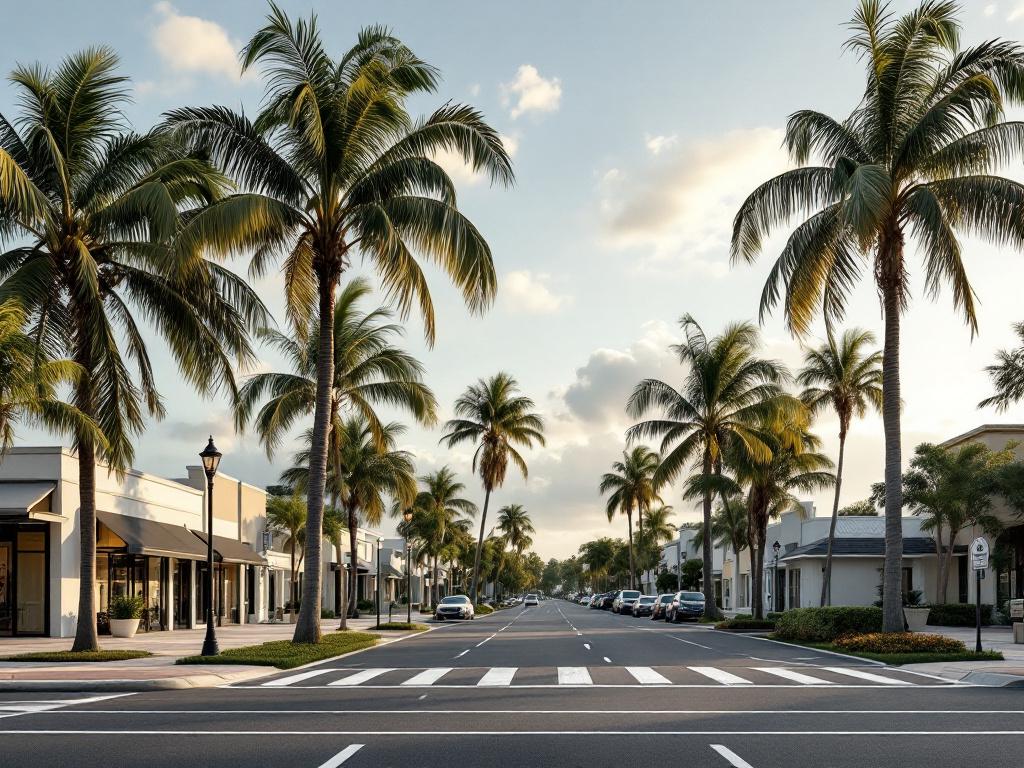
You've been scrolling homes for sale in Boynton Beach, Florida for forty-five minutes. A listing catches your eye — three beds, updated kitchen, asking $485,000. The agent describes the neighborhood as "up-and-coming." You don't recognize the street name. You're not sure if that's a fifteen-minute drive to Tri-Rail or a forty-minute one. You don't know whether the HOA dues quoted include the clubhouse or whether the community even has one. And you have no idea whether $485,000 here is a deal, market, or a stretch.
That ambiguity is the entire problem with Boynton Beach. The city grew 18% between 2010 and 2020, from 68,217 residents to 80,380, per U.S. Census Bureau QuickFacts. That growth wasn't uniform — it landed in master-planned western communities, infill condos near the Tri-Rail station, and pockets of older east-side stock that's now being renovated block by block. The result is a market where neighborhood character changes dramatically within a half-mile radius. If you're comparing this to Boca Raton real estate further south, the variance is even sharper here.
By the end of this guide, you'll be able to score five neighborhoods against your priorities, understand what $300K through $750K actually buys, and decide whether new construction or resale is the smarter 2026 play.
Table of Contents
- The Five Boynton Beach Neighborhoods Where Buyers Actually Compete in 2026
- Walk Score, School Zones & Commute Times: The Boynton Beach Neighborhood Decision Matrix
- What $300K, $500K, and $750K+ Actually Buys Across Boynton Beach
- New Construction Homes Boynton Beach vs. Resale: The 2026 Cost & Timeline Showdown
- Five-Year Resale Outlook: Which Boynton Beach Neighborhoods Hold Value
- Your Pre-Offer Boynton Beach Neighborhood Verification Checklist
- FAQ
The Five Boynton Beach Neighborhoods Where Buyers Actually Compete in 2026
Most buyers assume their first decision is HOA versus non-HOA. In Boynton Beach, that framing misses reality. Zillow currently shows 746 active listings tagged "Gated Community" within the city (Zillow), meaning the genuine decision is almost always between competing HOAs with different age policies, amenity tiers, and reserve health. The handful of non-HOA submarkets — primarily Seacrest and select downtown blocks — operate on different rules entirely. Below are the five Boynton Beach neighborhoods where the bulk of 2026 buyer competition will play out.
Downtown Boynton Beach — A mixed-use corridor centered on East Ocean Avenue and Federal Highway, walkable to the Tri-Rail station and the new municipal district. Walk Score sits in the "Somewhat Walkable" 50s in tight pockets, against a city baseline in the mid-30s per Walk Score. The buyer profile skews 30s to 40s — hybrid commuters running two to three days a week into Fort Lauderdale or Miami, supplementing I-95 with Tri-Rail. Inventory leans condo and townhome, with a small but growing infill single-family stock. Primary access: Federal Highway and I-95 via Boynton Beach Boulevard.
The Bridges — A far-west gated community off Lyons Road, master-planned with clubhouse, pools, tennis, and on-site programming. Buyer profile: families with school-age children and relocating professionals from the Northeast and Mid-Atlantic. Lot sizes are generous by South Florida standards, and homes typically run 2,500 to 4,500 square feet. Car-dependent — I-95 is six to eight miles east. Differentiating fact: the HOA is mature enough to have a published reserve study but young enough that special assessments haven't yet hit residents the way they have in older Florida communities.
Leisureville Boynton Beach — A 55+ age-restricted community established in the 1970s, and the dominant entry-level option for retirees. Roughly 23–24% of Boynton Beach residents are 65 or older (Census QuickFacts), which sustains demand but narrows the future buyer pool, per AARP research on age-restricted housing. Stock is one- and two-bedroom villa and condo product, 1,100 to 1,500 square feet, build years 1970–1985. Lowest entry prices in the city. Primary access: I-95 is one mile east, Tri-Rail station about ten minutes by car.
Seacrest — An established east-of-I-95 neighborhood north of downtown, defined by mid-century single-family homes on quarter-acre lots. This is where renovators and second-home buyers compete. Walkability bleeds in from the downtown corridor — Walk Scores reach the low 40s on some blocks. Most properties carry no HOA or a very light one. Differentiating fact: Seacrest is the only Boynton Beach submarket where you can buy a non-HOA single-family home east of I-95 at a price below the city's coastal averages. Build years range from the late 1940s through the 1970s.
Ocean Ridge Boynton Beach — Technically its own barrier-island municipality, but used by Boynton Beach buyers as a coastal comparison. Waterfront premium, intracoastal and Atlantic Ocean access, very low housing density. Buyer profile: high-net-worth, often cash, frequently second-home. Insurance and flood-risk costs are material here — Keys et al. in the Quarterly Journal of Economics document measurable price discounts on flood-exposed Florida homes after disclosure improvements. Primary access: A1A and the Ocean Avenue bridge.
Walk Score, School Zones & Commute Times: The Boynton Beach Neighborhood Decision Matrix
These five Boynton Beach neighborhoods can be scored side-by-side once you isolate the variables that actually predict daily satisfaction: walkability, freeway access, transit options, HOA cost, and price band. The matrix below pulls only data points where every cell is sourced.
| Neighborhood | Walk Score Band | Distance to I-95 | Tri-Rail Access | Typical HOA Range |
|---|---|---|---|---|
| Downtown Boynton | Somewhat Walkable (50s) | 1–2 mi | Walkable / 5 min | $300–$600/mo |
| The Bridges | Car-Dependent (20s–30s) | 6–8 mi | 15–20 min drive | $400–$700/mo |
| Leisureville | Car-Dependent (30s) | 1 mi | 10 min drive | $150–$300/mo |
| Seacrest | Somewhat Walkable (40s) | 1.5 mi | 8 min drive | $0–$200/mo |
| Ocean Ridge | Car-Dependent (20s) | 3 mi (via bridge) | 15 min drive | $0–$500/mo |
| Neighborhood | Typical Price Band |
|---|---|
| Downtown Boynton | $280K–$550K |
| The Bridges | $700K–$1.4M |
| Leisureville | $180K–$320K |
| Seacrest | $400K–$750K |
| Ocean Ridge | $1.2M–$8M+ |
HOA ranges reference Florida industry surveys showing condos at $300–$800/month and single-family HOAs at $150–$400/month, summarized by the Tampa Bay Times. Walk Score bands come from the city baseline with urban-core adjustments. Price bands are cross-referenced against Homes.com neighborhood data.
The commute pivot. Tri-Rail runs seven days a week with peak headways of 20–30 minutes, per the South Florida Regional Transportation Authority. For a buyer commuting to Fort Lauderdale or Miami two or three days a week, Downtown Boynton and Seacrest are the only neighborhoods where Tri-Rail meaningfully substitutes for I-95. The Bridges and Palm Meadows residents will drive every time — the fifteen-to-twenty-minute trip to the station defeats the purpose. If you're weighing this against coastal condo product further south, the Fort Lauderdale condo market follows similar walkability-to-transit logic.
The walkability trade-off. Jeff Speck's research, summarized by Strong Towns, shows homes in walkable neighborhoods command meaningful premiums versus comparable car-dependent stock. Downtown Boynton and Seacrest carry that premium. The Bridges and Leisureville don't — they compete on lot size, amenity depth, and HOA tier. Neither approach is wrong; they're priced for different buyer priorities.
The HOA spread. Leisureville's $150–$300/month looks attractive against The Bridges' $400–$700, but post-Surfside reserve studies have surfaced underfunded reserves across older Florida HOAs, documented at length in the Miami Herald Surfside investigation. The dues line item is only honest when the reserve is funded. Always request the reserve study before treating an HOA quote as a stable carrying cost.
Your commute pattern to Miami or Palm Beach will shape your neighborhood choice more than school ratings or walkability — especially if you're working from home two days a week.
What $300K, $500K, and $750K+ Actually Buys Across Boynton Beach
The 2018–2022 American Community Survey put Boynton Beach's median owner-occupied home value in the low-to-mid $300,000s, per Census QuickFacts. That figure is now meaningfully out of date. Florida Realtors local market reports for Palm Beach County show median days to contract running in the 20–30 day range across 2023–2024, and Dr. Brad O'Connor, chief economist at Florida Realtors, notes that Florida's housing market continues to be driven by strong domestic and international migration, keeping inventory tight and prices elevated. 2026 buyers should expect price floors meaningfully above that ACS median.
At $300K
This tier is dominated by Leisureville Boynton Beach and similar 55+ stock, plus older Downtown Boynton condos. Expect two-bed/two-bath product, 1,100 to 1,500 square feet, build years 1970–1985. Plan for $10,000 to $20,000 in deferred maintenance findings at inspection, per American Society of Home Inspectors benchmarks: roof age, HVAC nearing end-of-life, original electrical panels, and single-pane windows that fail current Florida Building Code wind-load standards and would not be permitted in new construction. For non-55+ buyers, $300K in Boynton Beach is effectively a renovator's tier. If that ceiling feels too tight, contrasting markets like Sebring offer different value at this price point.
At $500K
The sweet spot for single-family resale. Seacrest mid-century homes (1,800 to 2,400 square feet, quarter-acre lots, often partially updated) compete here with Downtown Boynton townhomes featuring garage and rooftop terrace, plus entry-level homes in mid-tier gated communities. For reference, the Caloosa neighborhood carries an average value around $681,000 per Homes.com, so $500K buys the lower listings within those mid-market neighborhoods, not the median. Expect updated kitchens and baths but original roofs and HVAC in roughly half the inventory. Budget a four-point inspection and wind mitigation report regardless of cosmetic condition.
At $750K and Above
The Bridges single-family homes, Palm Meadows Estates (roughly 288 Lennar-built luxury homes with 3–5 bedrooms and 2,000–5,000 square feet under air, per a local neighborhood guide), Windsong Estates (about 47 estate homes built 2003–2008), and the entry tier of Ocean Ridge Boynton Beach. Above $1.2M, you're competing for waterfront and intracoastal product where flood-risk-adjusted pricing applies — the Atlanta Fed's flood-risk research documents the discount mechanism. Lot sizes, ceiling heights, and finish budgets all step up meaningfully versus the $500K tier.
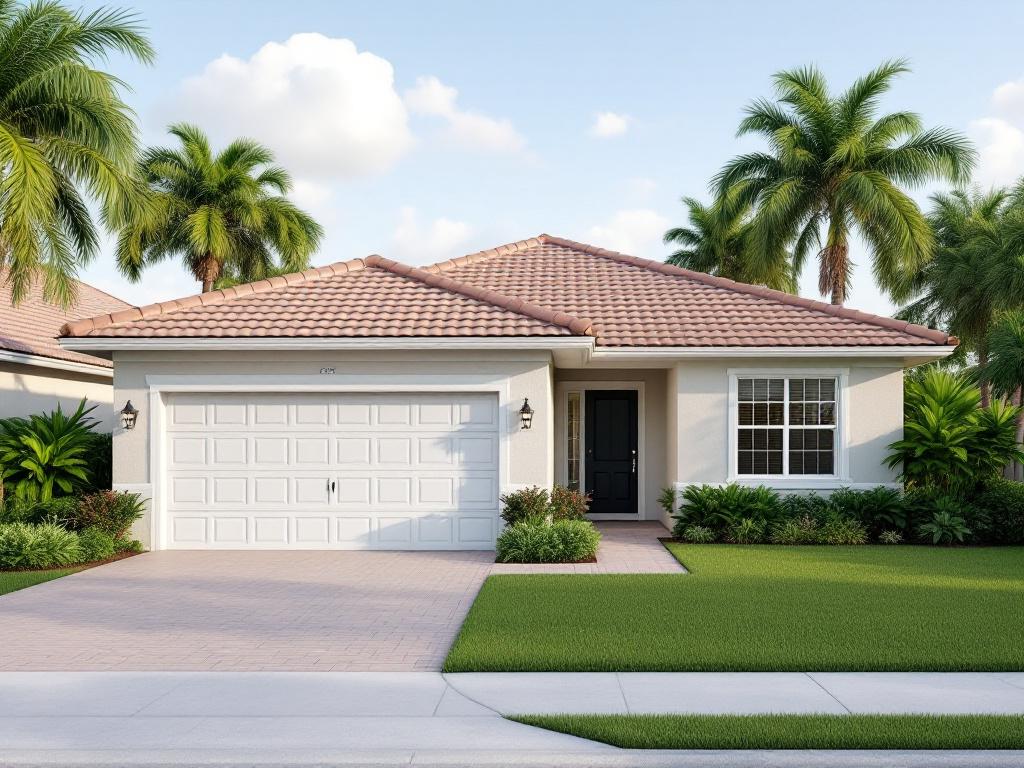
Red flags when a price looks too low. Skipped four-point inspections in listing remarks are a tell — the seller likely already knows what an inspection will find. Properties marketed without an HOA reserve study disclosure should be treated cautiously. "As-is" listings in 55+ communities, particularly Leisureville, often correlate with an estate rushing to clear inventory and aggregate deferred maintenance. None of these are disqualifying, but they should compress your offer, not expand your enthusiasm for homes for sale in Boynton Beach, Florida at apparent discounts.
New Construction Homes Boynton Beach vs. Resale: The 2026 Cost & Timeline Showdown
The 2026 Boynton Beach buyer is effectively choosing between two paths: waiting nine to twelve months for a master-planned new build in The Bridges or Palm Meadows Estates, or closing in thirty to forty-five days on a Seacrest or Leisureville resale that will need work. The National Association of Home Builders reports a national median of 7.6 months from permit to completion for single-family homes built for sale. South Florida regularly stretches that to nine to twelve months because of Florida Building Code wind-load requirements and impact-glass mandates in Palm Beach County's Wind-Borne Debris Region, which often carries design wind speeds above 170 mph.
| Factor | New Construction | Resale (30+ yr stock) |
|---|---|---|
| Price premium | 15–20% above comparable resale | Baseline |
| Timeline to keys | 9–12 months from contract | 30–45 days from contract |
| Customization | Finishes, cabinets, flooring | Limited; renovate post-close |
| Code compliance | Current FBC, 170+ mph wind | Pre-2002 often non-compliant |
| Inspection findings | Builder warranty; minimal | $10K–$20K typical |
| Factor | New Construction | Resale (30+ yr stock) |
|---|---|---|
| HOA maturity | New; reserves building | Mature; reserve study visible |
| Year-one property tax | Full assessed value | Resets at sale from seller's cap |
Property tax mechanics matter more than most buyers realize. Florida's Save Our Homes cap, administered by the Florida Department of Revenue, limits annual assessed-value increases for homesteaded properties to 3% or CPI, whichever is lower. That cap resets to full market value at sale — which is why the seller's current tax bill is almost never a reliable forecast for your year-one bill.
The 15–20% premium is partly insurance arbitrage. New construction built to current FBC standards qualifies for materially lower wind-mitigation insurance credits. Florida's property insurance crisis has pushed premiums up sharply, as documented by The New York Times. Dr. Charles Nyce at FSU has noted that rising insurance costs are increasingly a deciding factor in whether middle-income households can afford to both buy and hold. A new home's lower premium can offset roughly three to five years of the price premium, depending on size and coastal exposure.
The year-one tax shock hits both, but harder on resale of long-held homes. A Leisureville villa the seller bought in 1995 may carry an annual tax bill near $1,800; the buyer's year-one bill will land closer to $4,500 at Florida's ~0.89% effective rate per the Tax Foundation. Current Boca homeowners considering a move face the same reset when they sell their Boca Raton home and rebuild a new homestead exemption. Plan for the reset; do not be surprised by it.
HOA maturity cuts both ways. New construction in a master-planned community means no special-assessment risk for five to ten years, but unknown long-term governance — the reserve hasn't been stress-tested. Mature HOAs in Leisureville-era stock have visible reserves and, often, visible problems. Communities that completed reserve studies and either raised dues or levied assessments in 2022–2024 have de-risked the next decade. Communities that haven't done either are pricing in a future hit you may inherit.
New construction homes Boynton Beach pricing runs 15–20% above comparable resale, but you'll avoid $10K–$20K in inspector findings and qualify for lower wind-mitigation insurance — which can recover the premium within five years.
Five-Year Resale Outlook: Which Boynton Beach Neighborhoods Hold Value
Appreciation is not uniform across Boynton Beach real estate. Dr. Ken Johnson at FAU has observed that most of South Florida has moved from significantly overvalued to more moderately overvalued as income growth and rent growth catch up with prices, but buyers should still treat coastal properties as long-term holds rather than quick flips. That framing favors long-hold strategies and penalizes neighborhoods without sustained investment anchors. The six items below are how an experienced buyer separates genuine appreciation candidates from cosmetic ones.
- Verify the renewal anchor before betting on "up-and-coming." Brookings research by Jenny Schuetz shows up-and-coming neighborhoods underperform broader metro appreciation unless anchored by transit, schools, or employment investment. Downtown Boynton's Tri-Rail station and ongoing East Ocean Avenue redevelopment qualify as genuine anchors. A repainted strip mall and a new coffee shop do not. Inland Florida markets like Ocala follow entirely different appreciation drivers — don't import assumptions across regions.
- Check the 55+ buyer-pool math for age-restricted purchases. Leisureville Boynton Beach entry pricing is attractive, but Dr. Rodney Harrell at AARP warns that the pool of potential future buyers is narrower, which can lengthen time on market when it's time to sell. Plan for resale timelines roughly 30 to 60 days beyond comparable open-market homes. That carrying cost should factor into your offer.
- Price in insurance escalation for coastal product. Ocean Ridge and east Boynton waterfront face premium increases that have doubled in some cases over recent years. Future buyers will discount accordingly; current sellers above $1.5M are already seeing shrinking buyer pools. If you're buying coastal, model insurance at 1.5x the seller's most recent quote — and treat any quote older than 60 days as stale.
- Discount flood-exposed addresses by roughly 5–10%. Keys et al. and the Atlanta Fed both document measurable price discounts on flood-exposed Florida homes after disclosure improvements. FEMA flood-zone status (particularly Zone AE or VE) should be a line item in any offer analysis, not a footnote. The discount compounds because flood-exposed homes also face the steepest insurance increases.
- Reserve studies predict the next decade. Post-Surfside, Florida HOAs are required to maintain funded reserves under the updated statutes. Communities that completed their reserve studies and acted on them — by raising dues or levying assessments in 2022–2024 — have already absorbed the worst of the adjustment. Communities that have deferred that work are sitting on a future special-assessment liability that will land on whoever owns the unit when it hits.
- Ask your agent five specific questions about the next three to five years. What zoning changes are pending within a half-mile radius? Are there approved (not just proposed) commercial developments? What's the days-on-market trend for this specific HOA over 24 months? When was the last reserve study completed, and what did it recommend? What's the insurance premium history on this exact address? An agent who can answer all five from documents — not from memory — is doing the work.
Leisureville's low entry price masks a narrower buyer pool — resale timelines can stretch 30–60 days longer than comparable Seacrest homes, where the open-market buyer base is broader.
Your Pre-Offer Boynton Beach Neighborhood Verification Checklist
Before you submit an offer on any Boynton Beach home, complete this checklist. Each item produces a document, a data point, or a personal observation that a listing agent cannot pre-package for you.
- Walk the block at three different times. Weekday morning between 7 and 8 AM, weekday evening between 5 and 7 PM, and Saturday midday. Note traffic noise, street parking saturation, school pickup patterns, and whether amenities advertised by the HOA are actually used by residents.
- Pull the FEMA flood map for the exact address. Use FEMA's Flood Map Service Center directly — don't rely on the listing portal's flood-risk badge. Anything in Zone AE or VE materially changes insurance cost and resale liquidity, consistent with the QJE flood-risk findings cited earlier.
- Request the HOA reserve study and last two years of meeting minutes. Florida Statutes Chapter 718 (condominiums) and Chapter 720 (homeowners associations) entitle prospective buyers to these records. If the seller cannot produce them within 72 hours, treat that as a red flag and either compress your offer or walk.
- Verify the school zone with the Palm Beach County School District directly. Listing portals lag rezoning by 6 to 18 months. School zone changes materially affect resale, especially in family-driven submarkets like The Bridges and the western corridor.
- Estimate your year-one property tax bill, not the seller's. Use the Palm Beach County Property Appraiser to look up the home's just-market value, apply the current millage, then apply the $50,000 homestead exemption only if Boynton Beach will be your primary residence. Investment buyers do not get the exemption.
- Get three insurance quotes before removing contingencies. Florida's insurance market shifts monthly. A quote from sixty days ago is no longer reliable. If you're purchasing as an investment property, the carrier set and pricing differ from owner-occupied — Boca Raton property management operators see this monthly and can flag carriers actively writing in your target neighborhood.
- Budget for a four-point inspection and wind mitigation report on top of the general inspection. ASHI standards put the general inspection at $300–$500, but on any home built before 2002, also budget a sewer scope and explicit roof age verification. The wind mitigation report directly affects your insurance premium and is worth its cost on the first quote alone.
- Confirm Tri-Rail and I-95 commute times during peak hours. Run the actual commute on a Tuesday morning at 7:30 AM — not a Google Maps midday estimate. Tri-Rail schedules at the SFRTA site referenced earlier give you the published headways, but only a live test reveals the parking-to-platform reality.
When the checklist is complete, you'll have eight documents and three site visits that together establish whether the agent's pitch matches the underlying reality. Schedule your showings on the homes for sale in Boynton Beach, Florida that survive all eight checks — not the ones with the prettiest listing photos. If nothing in Boynton survives your filters, comparable inventory in Boca Raton follows similar diligence rules and is worth running through the same eight steps.
FAQ
Which Boynton Beach neighborhoods are age-restricted (55+)?
Leisureville is the dominant 55+ community in the city, anchored by 1970s-era villa and condo stock at entry-level pricing. Upper-tier 55+ options include the Valencia series — Valencia Bay and Valencia Sound — which appear in the Homes.com neighborhood index with larger homes, newer construction, and amenity-rich clubhouses. Roughly 23–24% of Boynton Beach residents are 65 or older, which sustains demand across the age-restricted segment but, as AARP research notes, narrows the future buyer pool when you eventually resell. Plan for slightly longer resale timelines than comparable open-market homes.
What's the realistic property tax and HOA cost in Boynton Beach real estate?
Florida's effective property tax rate sits at approximately 0.89% per the Tax Foundation, but year-one bills reset to full market value at purchase regardless of the seller's prior tax history. Apply the $50,000 homestead exemption only for primary residences, per the Florida Department of Revenue. HOA fees commonly run $150–$400/month for single-family HOA communities and $300–$800/month for condos, summarized by the Tampa Bay Times. Always request the reserve study before treating the advertised dues as a stable carrying cost — funded reserves and current dues are two different signals.
How far is Boynton Beach from Tri-Rail, Brightline, and the nearest airport?
Boynton Beach has its own Tri-Rail station offering seven-day-a-week regional service to Miami and West Palm Beach, with peak headways of 20–30 minutes per the SFRTA. The nearest Brightline station is West Palm Beach, roughly 15 miles north. Palm Beach International (PBI) is 12–15 miles north of the city; Fort Lauderdale-Hollywood International (FLL) sits 30–35 miles south. I-95 access from most neighborhoods ranges from 1 mile (Leisureville, Downtown) to 6–8 miles (The Bridges, Palm Meadows Estates).