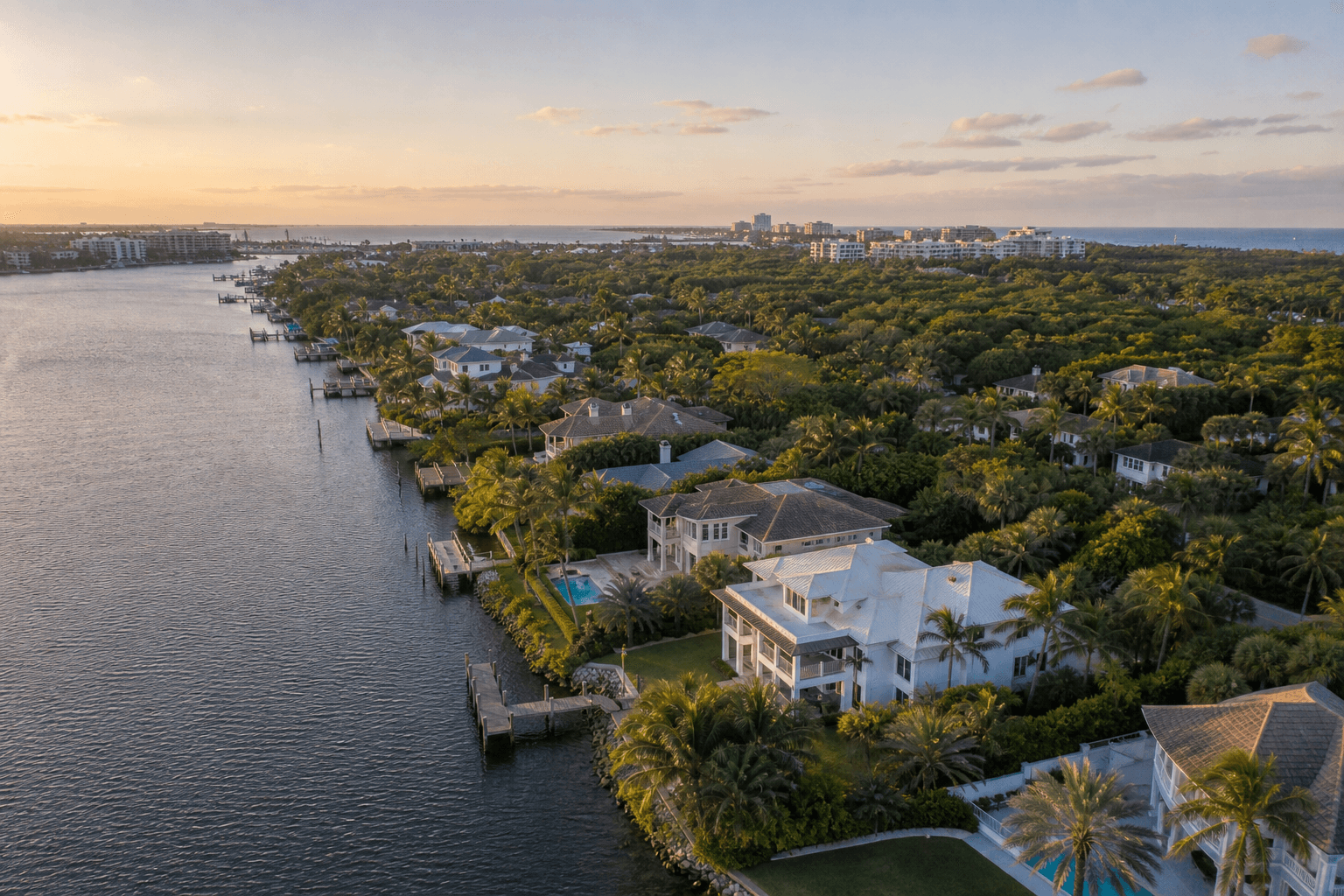
Jupiter Florida Homes for Sale: A Buyer's Guide to South Florida's Hidden Gem
You have spent weeks scrolling listings. Miami's density wore you down, Boca's price ceiling boxed you out, Palm Beach proper felt too formal — and yet you keep circling back to one town. When you search jupiter florida homes for sale, you are not asking where Jupiter is. You already know it fits the profile you want: coastal without chaos, upscale without pretension. The real question is whether this is the right place to commit $700K to $2M or more, and how you find the right home before the good ones move.
Start with a number. The median listing price in Jupiter runs roughly $784,490 according to Realtor.com data compiled by Echo Fine Properties, which places the town firmly in Palm Beach County's upper tier against the county-wide median of $649,900. But sticker prices only tell you where the market points, not where it sits. Conditions have shifted. Prices are softening and the market is more balanced than the 2021–2022 boom, according to a local market snapshot. This guide covers price tiers, neighborhood selection, the waterfront decision, market timing, the true cost of ownership, and the mechanics of closing — with the numbers to back each call.
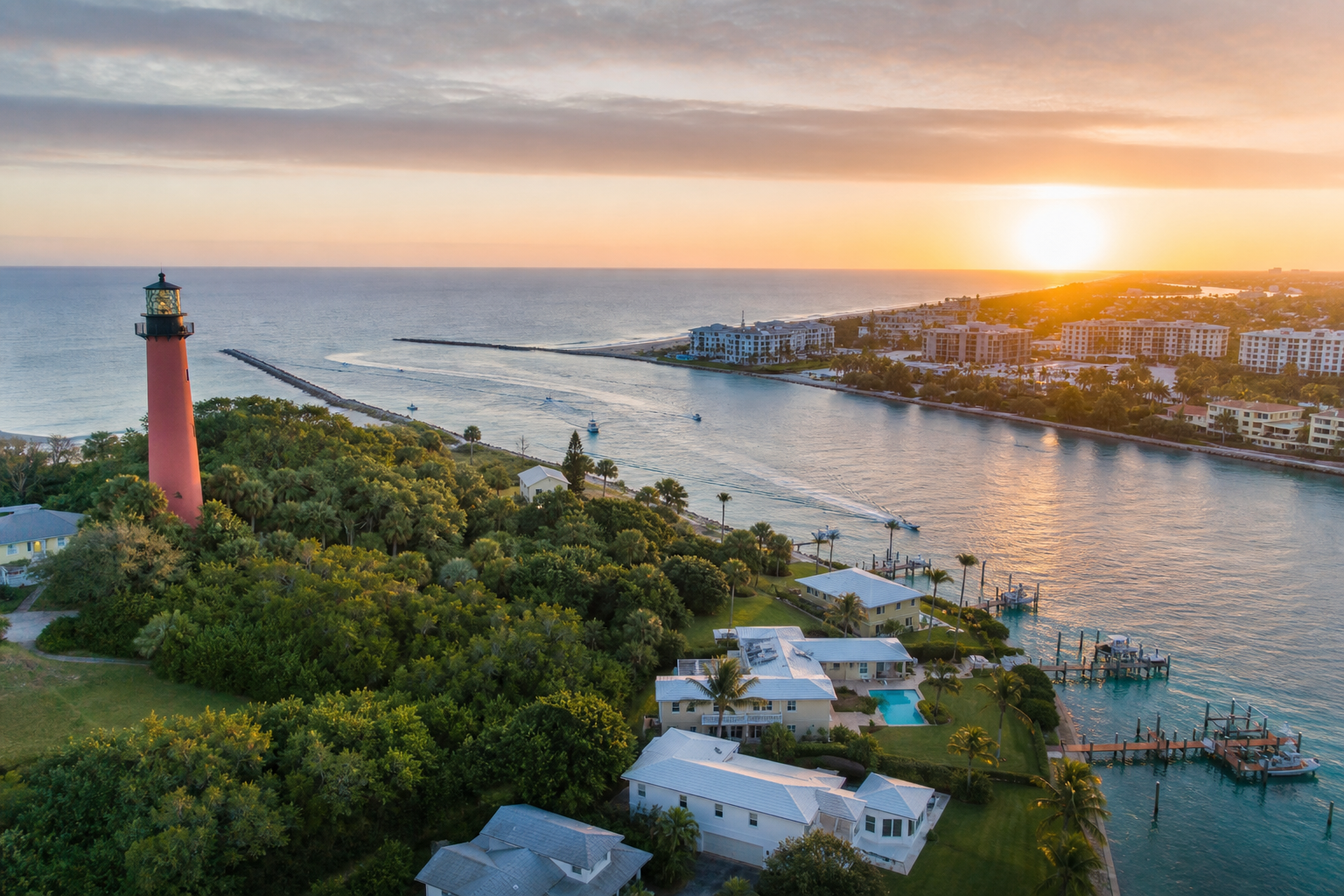
Table of Contents
- What You Actually Get for Your Money Across Jupiter's Price Tiers
- Choosing Your Neighborhood
- The Waterfront Question
- Timing the Jupiter Market
- The Carrying Costs That Decide Whether You Can Afford to Stay
- The Jupiter Buyer's Playbook
- Jupiter Home-Buying Questions Buyers Ask Most
What You Actually Get for Your Money Across Jupiter's Price Tiers
Set the baseline before you set a budget. The median listing price sits near $784,490, the median price per square foot near $447, with roughly 900+ active listings on the market, per Realtor.com figures. That is what sellers are asking. What buyers are actually paying tells a different story. Over the three months ending May 2026, the Redfin median sale price for all home types was about $670,000, down roughly 5% year-over-year, while price per square foot came in near $430, up about 9% year-over-year. Zillow's typical home value lands at around $675,651, down about 5.1% over the past year.
That gap matters. Listing medians cluster around $784K to $900K. Sold medians cluster around $670K to $702K. The roughly $100K spread between what sellers ask and what homes close for is itself a negotiation signal, consistent with the ~96% sale-to-list ratio — about 4% below ask on average. You are shopping a market that expects to give ground.
| Price Tier | Typical Home Type | Location/Lot Profile | Carrying-Cost Reality |
|---|---|---|---|
| Entry (<$600K) | Townhomes, older SF, condos | Non-gated, inland | HOA on townhomes; lower insurance if inland/X-zone |
| Mid ($600K–$1.2M) | Established SF, Abacoa, Jupiter Farms | Gated village or 1.25-acre+ acreage | HOA + possible CDD (Abacoa); well/septic on acreage |
| Luxury ($1.2M–$3M) | New construction, gated, near-water | Coastal corridor, gated golf | Higher HOA, wind/flood insurance climbs |
| Waterfront/Estate ($3M+) | On-water estates, country club | Intracoastal/oceanfront/canal | Club initiation $285K–$475K; highest insurance |
The entry tier below $600K puts you in townhomes, older non-gated single-family, or condos. Expect HOA dues on attached product and lower insurance if the property sits inland in an X-zone. The mid tier from $600K to $1.2M is where most of the market lives: established single-family homes, Abacoa's planned villages, and Jupiter Farms acreage. Jupiter Farms runs from the mid-$400,000s to over $1M on 1.25-acre-plus lots, typically 2,000 to 3,500 square feet, often on well and septic with no HOA on many parcels.
The luxury tier from $1.2M to $3M brings gated communities, newer construction, and proximity to water — along with wind and flood insurance costs that climb steeply. The top tier at $3M and up is where the water changes everything. Admirals Cove carries a median listing price around $9.75M with club initiation fees of $285,000 to $475,000 before you furnish a single room.
The waterfront premium is the sharpest line in the market. Roughly 200 waterfront listings commonly ask $1.8M to $4.8M+, against a broader-market median in the mid-$600Ks to $900Ks. Gated versus non-gated, new construction versus resale, and the carrying-cost layers of HOA, CDD, and insurance all separate the sticker price from your true cost. If you are cross-shopping against neighboring markets, the homes for sale in Jupiter FL upper tier compares favorably on lot size against similar money in Boca Raton.
In Jupiter, the price gap between near the water and on the water can double your budget — and it's the single biggest decision you'll make.
Choosing Your Neighborhood: Abacoa, Admirals Cove, Jupiter Farms, and the Coastal Corridor
Neighborhood selection in Jupiter is really buyer-archetype selection. Four community types cover most of what buyers weigh, and each rewards a specific profile while punishing a mismatch. Get this right and the buying a home in Jupiter FL process gets simpler; get it wrong and you are fighting the fee structure and lifestyle for years.
| Community | Price Range | Boat Access | HOA/Fee Level | Best-Fit Buyer |
|---|---|---|---|---|
| Abacoa | $600K–$1.2M | No | $700–$800/qtr + POA + NPBCID | Young family / walkable-urban |
| Admirals Cove | $3M–$10M+ | Yes (deepwater) | Club init. $285K–$475K + dues | The boater / luxury |
| Jupiter Farms | Mid-$400Ks–$1M+ | No | Often none (well/septic) | Acreage seeker |
| Coastal Corridor | $1M–$4M+ | Varies | Varies | Walk-to-water buyer |

Abacoa is the walkable New Urbanist choice — a town center with storefronts, single-family homes, and townhomes built for young families and professionals who want to leave the car at home. The catch is the fee stack. Abacoa buyers face three cost layers: village-level HOA dues, a possible Abacoa POA master assessment, and Northern Palm Beach County Improvement District non-ad valorem assessments that land on the property-tax bill. Village HOA dues run $700 to $800 per quarter for single-family homes, including basic cable and common-area maintenance, and roughly $560 to $640 per quarter for townhomes. A general South Florida agent who does not know Abacoa will quote you the village dues and miss the other two layers entirely.
Admirals Cove is the ultra-luxury gated golf and boating play. Median listing near $9.75M, roughly 30-plus active listings, and club initiation of $285,000 to $475,000 plus tiered annual dues. This is a deepwater community — if you want a home where the boat and the golf are the point, this is the address. If you do not use both, you are subsidizing amenities you will not touch.
Jupiter Farms is the rural counterpoint: 1.25-acre-plus lots, prices from the mid-$400,000s past $1M, homes in the 2,000 to 3,500 square foot range, well and septic, and often no HOA at all. The tradeoff for space and freedom is distance from the beach and the town center, plus the maintenance responsibilities of well, septic, and acreage.
The Coastal Corridor covers near-beach and Intracoastal single-family homes for the buyer who wants to walk to the water. It carries the highest insurance exposure of the four, and pricing swings widely from $1M into the multiples depending on exact water relationship.
Map the archetypes and the choices resolve fast. The boater points to Admirals Cove or a canal/deepwater home. The young family points to Abacoa. The acreage seeker points to Jupiter Farms. The walkable-urban buyer points to the Abacoa town center. The Jupiter real estate market gives you genuinely distinct products, which is more than many South Florida towns offer — if you are also weighing Boca Raton's community landscape, the contrast in fee structure and lot size is worth mapping side by side before you commit.
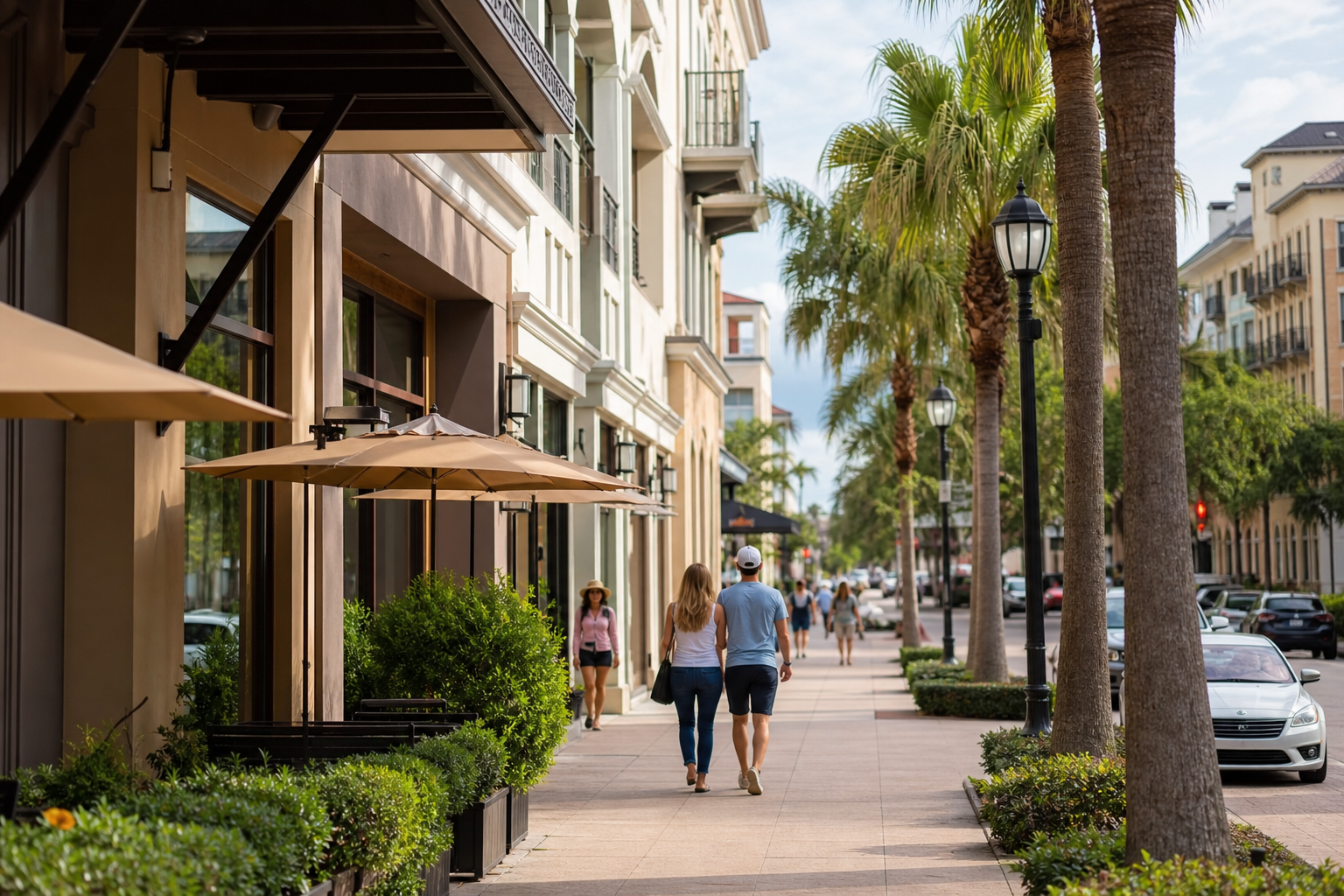
The Waterfront Question: Oceanfront, Intracoastal, Canal, or Dry Lot
Water access is not one feature you either have or lack. It is five different products with five different price tags, insurance profiles, maintenance obligations, and resale behaviors. The price gap alone should force the decision early: roughly 200 waterfront listings commonly ask $1.8M to $4.8M+, versus mid-$600Ks to $900Ks for the broader market.
Water access isn't one feature — it's five different lifestyles with five different price tags and five different insurance bills.
Oceanfront. The highest premium and the highest exposure. Direct beach access comes with the greatest wind and storm-surge risk, and construction seaward of the Coastal Construction Control Line falls under Section 3109 of the Florida Building Code. That means elevation above Base Flood Elevation and stricter wind and wave-force design standards. You are buying the view and the beach, and paying for the engineering and the insurance that make them viable.
Intracoastal. Protected navigable water gives you boating without ocean chop, which many owners prefer for daily use. The flood and insurance exposure remains high because you are still on open water, but you trade some surge risk for calmer conditions and steadier resale demand from boaters who do not want oceanfront maintenance.
Canal/Deepwater with Boat Lift. The boater's sweet spot — direct water access, a private dock, and a lift, usually at a lower entry point than oceanfront. Two diligence items decide whether it is a bargain or a trap: seawall condition and dock permitting. A failing seawall is a six-figure repair, and unpermitted dock work becomes your problem the day you close.
Lake/Preserve. Water views without navigable access. You get the sightline and the setting with materially lower insurance than open water, because there is no storm-surge pathway and often no flood-zone designation. For buyers who want the aesthetic without the boat, this is the efficient choice.
Dry Lot. No water premium and the lowest insurance if the property sits in an X-zone. If boating and water views are not priorities, a dry lot in a lower-risk zone keeps both your purchase price and your annual carrying cost down without sacrificing the Jupiter address.
Flood zone status underwrites all of this. FEMA "A" and "V" zones carry a 1% annual chance of flooding — about 25% risk over a 30-year mortgage — while "X" zones run lower but never zero. The map itself is moving. FEMA updates effective December 20, 2024 moved roughly 5,000 Jupiter properties into high-risk zones and downgraded about 900. Looking further out, Climate Central's Surging Seas Risk Finder estimates a 73% chance of at least one 3-foot flood by 2050 in the Jupiter area under selected scenarios. FEMA Administrator Deanne Criswell has warned that updated maps can force homeowners into higher-priced flood policies, which turns elevation from a lifestyle preference into a financial one.
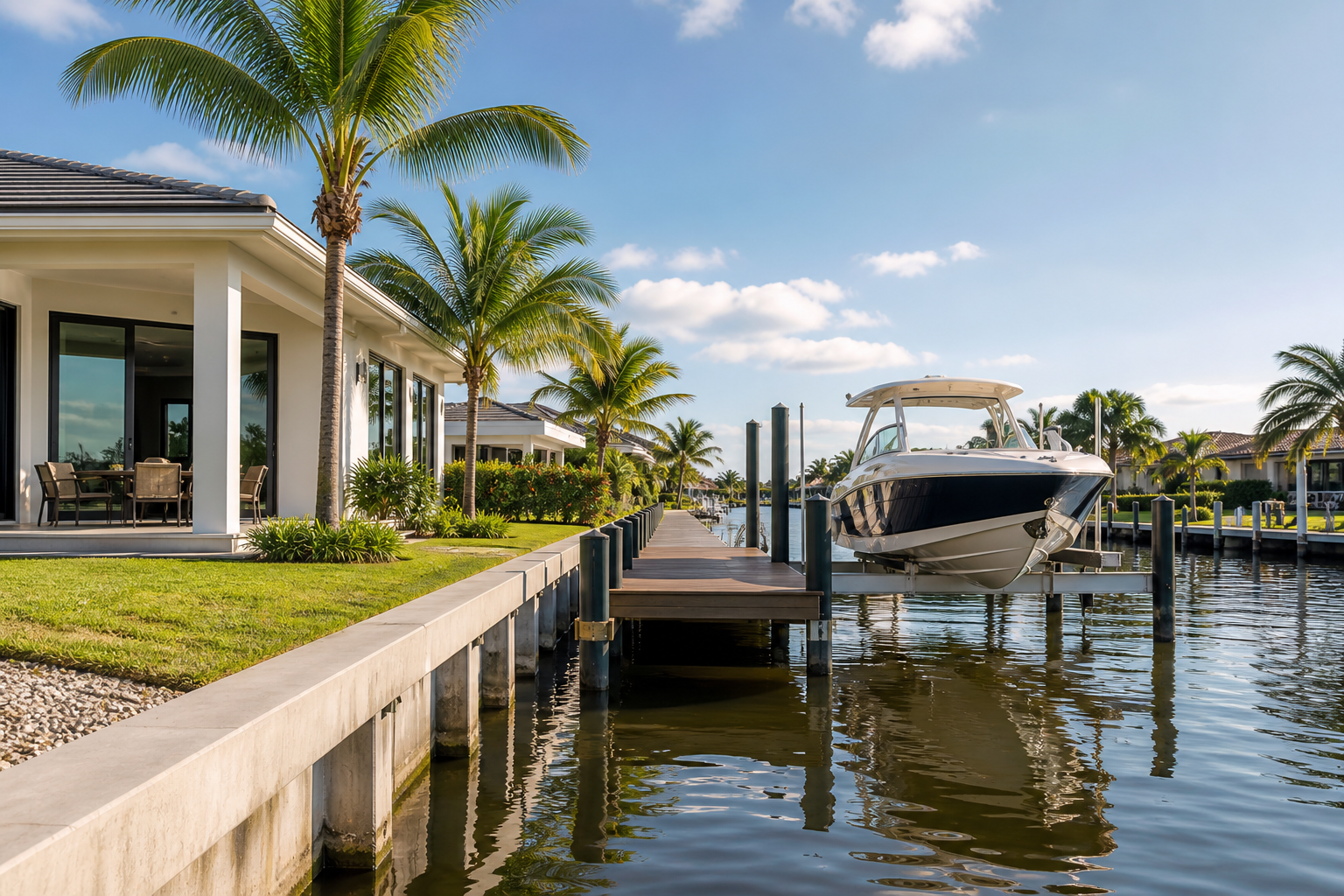
Timing the Jupiter Market: Seasonality, Inventory, and How Fast to Move
Jupiter runs on a snowbird calendar, and the timing of your search changes both your selection and your leverage. Winter, roughly November through March, brings a listing surge as seasonal residents arrive and put homes on the market — and it brings the peak of buyer competition at the same moment. Summer slows on both sides: fewer listings hit the market, and fewer buyers compete for them. The two seasons offer opposite tradeoffs. Shop in season and you get the widest selection against the firmest pricing and the most competition. Shop off season and you accept thinner inventory in exchange for more negotiating room and a less crowded field.
Velocity data tells you how fast you actually need to move. Homes in Jupiter take roughly 53 to 85 days to go under contract depending on tier — Zillow reports around 53 days to pending, while Realtor.com's median days on market sits near 85. That is not a market where good homes vanish in a weekend. You have time to run proper diligence, verify a seawall, and confirm a flood zone before you write. But the tier matters: entry and mid-tier product in desirable pockets moves faster than the luxury and waterfront segment, where longer marketing periods are normal and negotiation is expected.
The negotiating math is favorable right now. Sale prices average about 4% below list, a ~96% sale-to-list ratio. Combined with the roughly $100K spread between listing and sold medians established earlier, that tells you buyers currently have room. This is not a market where you calibrate offers to win a bidding war; it is one where you calibrate to a seller who already expects to give a few points.
The macro backdrop reinforces the shift. Florida's once-"sizzling" housing market has "simmered down", per Florida Trend, as sellers respond to skyrocketing insurance premiums, softening demand, and growing inventory by cutting prices. A local Jupiter snapshot confirms rising inventory and softening prices against the 2021–2022 peak. Lawrence Yun, Chief Economist at the National Association of Realtors, has repeatedly noted that high-price coastal markets are especially sensitive to mortgage rates and insurance costs, producing slower sales and more price negotiation whenever either spikes. That dynamic maps directly onto Jupiter's $700K to $2M-plus tiers, where insurance premiums and financing costs weigh heaviest on the buyer pool.
The practical read: you are shopping a buyer-favorable-leaning market with enough time on the clock to do it right, but not so much slack that you can dawdle on a genuinely well-priced home. If you want to understand the mirror image of your position — how sellers are pricing and repositioning under the same pressures — the mechanics of selling in a softening market explain exactly why the sale-to-list ratio has drifted below asking. Read the seller's incentives and you sharpen your own offer strategy.
The Carrying Costs That Decide Whether You Can Afford to Stay
The purchase price is the easy number. Florida's carrying costs are what separate a home you can buy from a home you can keep. Price out these line items before you make an offer.
The sticker price gets you in the door — Florida insurance and CDD fees decide whether you can afford to stay in the room.
- Property taxes and the Homestead Exemption. Florida allows up to $50,000 in reduced taxable value on a primary residence, and the "Save Our Homes" cap limits annual assessment increases to the lesser of 3% or CPI once you are homesteaded (Florida Department of Revenue). The eligibility rule is strict: you must own and occupy the home as of January 1 and file by March 1. Miss the window and you pay a full year at the uncapped rate.
- CDD and non-ad valorem assessments. In Abacoa specifically, Northern Palm Beach County Improvement District charges appear on the tax bill on top of HOA dues. These are easy to overlook because they do not show up in the listing or the HOA disclosure — they land in the tax line. The 2024 FEMA reclassification that moved roughly 5,000 properties into high-risk zones compounds this by pushing insurance requirements onto homes that previously escaped them.
- Flood insurance. The average NFIP policy in Florida runs about $776 to $938 per year, but coastal high-risk zones range from $400 up to $15,000+ per year depending on elevation and rating, per NFIP and NerdWallet's Florida flood-insurance analysis. That spread is the difference between a rounding error and a mortgage payment. Confirm the exact zone and the exact quote before you commit — not the seller's old policy, which may predate the new maps.
- Wind and hurricane insurance plus impact-window upgrades. Florida CFO Jimmy Patronis has described the state's property-insurance market as under "significant stress" from hurricane losses and litigation, driving sharp premium increases for coastal homeowners (Florida CFO briefings). Impact windows and a strong wind-mitigation report can pull premiums down materially, so factor the cost of upgrades on older homes into your offer.
- HOA dues. In Abacoa, single-family dues run $700 to $800 per quarter and townhomes roughly $560 to $640 per quarter. These are not static. Local Abacoa homeowners have flagged increases driven by irrigation and environmental-maintenance costs, which means the number in the current disclosure is a floor, not a ceiling.
- Non-resident versus homesteaded tax treatment. If Jupiter is a second home or an investment, you forfeit the $50,000 exemption and the 3%/CPI cap entirely. That raises your effective carrying cost meaningfully compared with a primary-residence buyer at the same purchase price — a swing you must model before you decide the property pencils.
Janet Cordero, a Jupiter-based Realtor, frames the whole exercise around one question: "what are the real total carrying costs?" For second-home and investment buyers who will not occupy year-round, the ongoing management burden is its own line item — the same discipline that goes into professional property oversight applies to a Jupiter second home, and it belongs in your carrying-cost math from the start.
The Jupiter Buyer's Playbook: From Pre-Approval to Closing
Move through these steps in order. Each one removes a specific risk from the transaction.
- Get pre-approved or prove funds. In a market with softening but still-competitive luxury tiers, sellers weight proof of funds and pre-approval heavily. Cash offers move faster and carry more credibility, and even financed buyers close stronger with a real pre-approval rather than a pre-qualification.
- Engage a Jupiter-specific agent. Local knowledge of Abacoa's three fee layers, CCCL construction constraints, and micro-neighborhood velocity is decisive. A general South Florida agent will not catch the NPBCID assessment on the tax bill or the seawall permitting question on a canal home. That local edge is the difference between an informed offer and an expensive surprise.
- Set MLS and alert criteria. With 900-plus active listings and 53 to 85 day marketing periods, automated alerts filtered by price tier, flood zone, and water type surface the right homes before the broad market notices them. Precision in your filters saves you weeks of scrolling.
- Tour strategically. Go in person for anything involving water, seawall, or elevation verification — these cannot be confirmed on a screen. Virtual tours are fine for out-of-state first passes to narrow the list, but the water relationship demands your own eyes.
- Make a competitive offer. Use the ~96% sale-to-list benchmark — about 4% below ask — to calibrate your number. That is the tool for a fair, winning offer, not a license to lowball a well-priced home into a stalemate.
- Run coastal-specific inspections. Prioritize roof age, seawall condition, and a wind-mitigation report, and confirm the property's current FEMA flood-zone status against the post-December 2024 maps. The old designation on the seller's paperwork may no longer apply.
- Complete HOA due diligence. Request governing documents, current dues, reserves, special-assessment history, rental rules, pet rules, and parking guidelines early in the contract period, per local brokerage guidance. A thin reserve fund or a recent special assessment tells you more about future costs than the current dues do.
- Close and file homestead. File by March 1 to lock the $50,000 exemption and the Save Our Homes cap for your first eligible year (Florida Department of Revenue). This is the last step and the one buyers most often forget in the rush of closing.
When you are ready to move from research to action on jupiter florida homes for sale, connect with a local Jupiter expert or start a personalized search. If you are still weighing Jupiter against nearby South Florida markets, run the carrying-cost math on both before you commit — and if a conventional purchase is not yet within reach, alternative paths like rent-to-own arrangements can bridge the gap.
Jupiter Home-Buying Questions Buyers Ask Most
Is Jupiter a good place to buy a short-term rental or investment property?
Rentals under 180 days require Palm Beach County Tourist Development Tax registration and a Short-Term Rental Business Tax Receipt per unit, plus confirmation of municipal zoning limits and HOA rental rules (Palm Beach County Constitutional Tax Collector). It is a multi-step setup that can delay your launch, so build the permitting timeline into your return projections before you buy. Deeper 2026 market detail is worth reviewing in the complete Jupiter buyer's guide.
How do property taxes differ for out-of-state buyers versus residents?
Non-residents forfeit the $50,000 homestead exemption and the Save Our Homes 3%/CPI assessment cap, which raises effective carrying cost measurably. Only owners who occupy the home as of January 1 and file by March 1 qualify for either benefit (Florida Department of Revenue). Model your taxes at the uncapped rate if Jupiter will be a second home rather than your primary residence.
How competitive is the Jupiter market — do homes go over asking?
Currently, no. Sale prices average about 4% below list, a ~96% sale-to-list ratio, reflecting softening and more balanced conditions rather than bidding wars. You have room to negotiate, which was not true during the 2021–2022 peak. Calibrate your offer to that benchmark rather than assuming you need to stretch above asking to win.