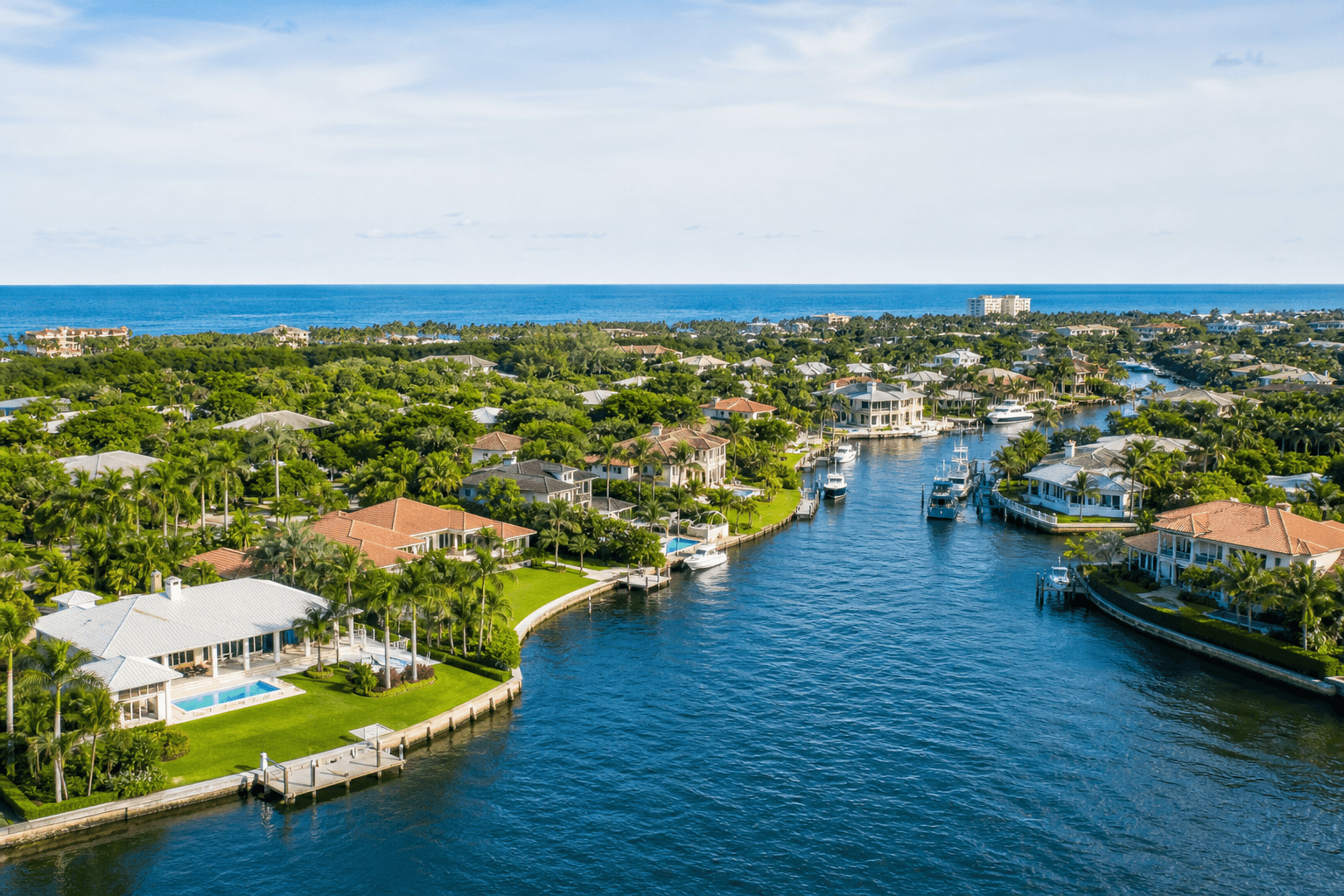
Jupiter, Florida Homes for Sale: A Complete 2026 Buyer's Guide
You've already been scrolling listings, so you've seen the numbers that don't add up. A "$432 per square foot" figure that makes you pause. A "waterfront" tag that might mean a deep-water dock or just a retention-pond view. A town-wide median that doesn't match a single home you've actually liked. When you search jupiter florida homes for sale, you get one number — a median sale price hovering around $670,000, down roughly 5% year over year, according to Redfin. That number is misleading, because Jupiter isn't one market. It's at least four.
The same budget buys radically different lives here. In Abacoa, it buys walkability and a master-planned town center. In Jupiter Farms, acreage and a horse. In Admirals Cove, a gated golf community with a yacht slip. On Jupiter Island, it barely opens the conversation. By the end of this guide you'll know which neighborhood fits your money, what the 2026 data actually means for your negotiating position, and how to move on a property in a town where homes go pending in roughly 53 days, per Zillow.
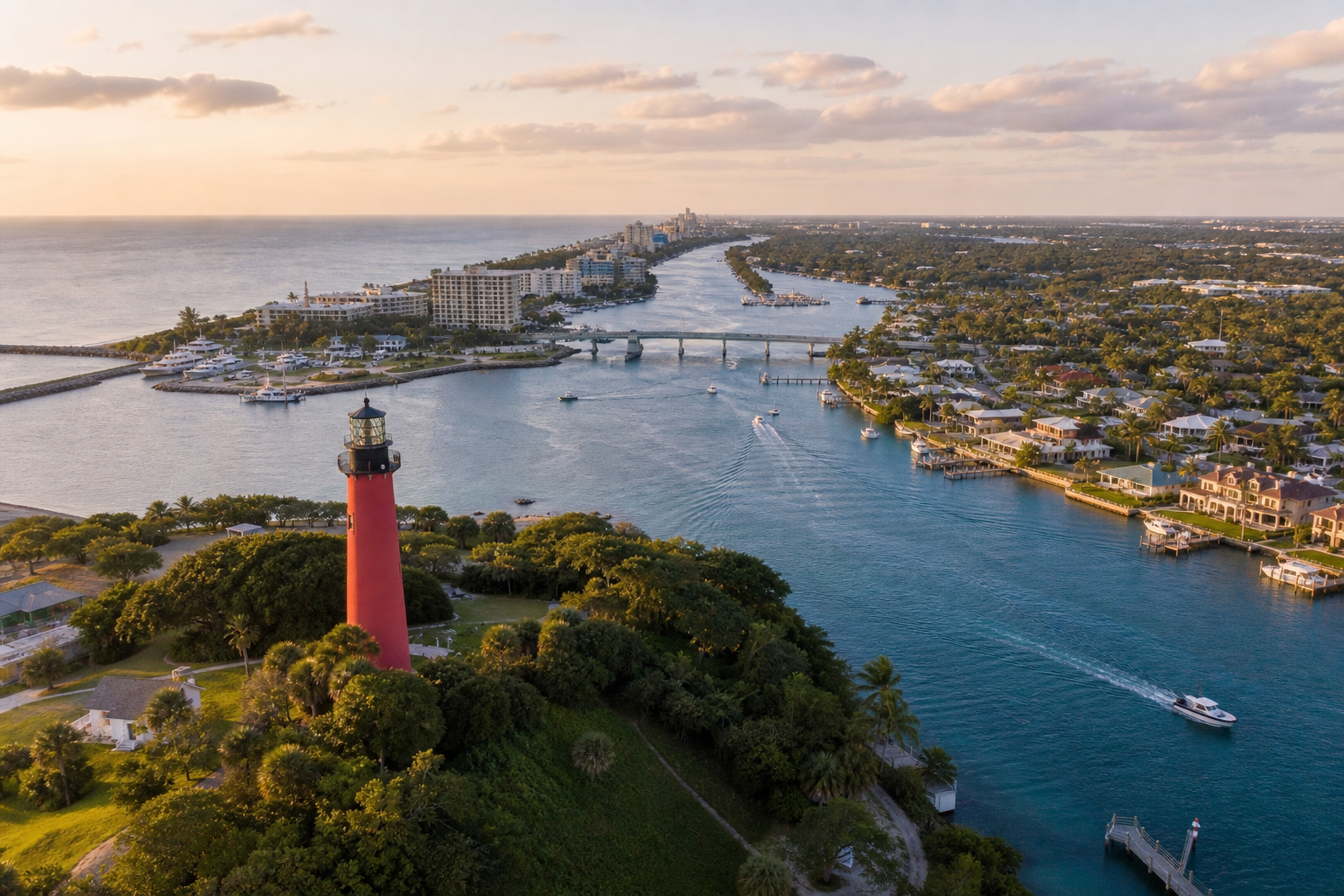
Table of Contents
- What Your Budget Actually Buys Across Jupiter's Four Price Tiers
- Jupiter's Neighborhoods, Ranked by Who Should Buy There
- Reading the 2026 Jupiter Market — Prices, Inventory, and Timing
- The Coastal Florida Cost Layers Buyers Underestimate
- Financing and Offer Strategy in a Competitive Coastal Market
- Mapping Your Jupiter Buying Path
- Your Jupiter Buyer's Briefing Sheet
- FAQ
What Your Budget Actually Buys Across Jupiter's Four Price Tiers
Money translates into product, not lifestyle — and the two are easy to confuse. Before you decide where you want to live, decide what your dollars actually deliver in physical terms: square footage, lot, and water access. Jupiter's market splits cleanly into four brackets, and each one buys a different category of home.
| Price Tier | Typical Home Type | Approx. Sq Ft Range | Lot / Water Access | Benchmark Data Point |
|---|---|---|---|---|
| $400K–$700K | Condo, townhome, entry SFH | 1,000–2,000 | Community grounds, no private water | Martinique at Abacoa ~$522K / $313 sq ft |
| $700K–$1.5M | Detached single-family | 2,000–3,500 | Standard lot, some gated | Town list median ~$784,490 / $447 sq ft |
| $1.5M–$4M | Large SFH, golf/gated, lower-tier waterfront | 3,500–5,500 | Canal/dock access possible | Q4 2025 SFH median ~$925,000 |
| $4M+ | Estate & ultra-luxury waterfront | 5,000+ | Deep-water dock, island | Island/intracoastal tier |
The $400K–$700K band is condos, townhomes, and entry single-family inside master-planned pockets. The cleanest benchmark here is Martinique at Abacoa, where the median sale price sits around $522,000 at roughly $313 per square foot — well below the town-wide $432, according to a Momentum Realty snapshot and Redfin per-square-foot data. That gap is the entire argument for master-planned communities as the value reference point. You're buying newer construction at a lower unit cost, trading private land and water for community amenities.
The $700K–$1.5M band is the heart of the detached single-family market and where most serious shoppers land. The town-wide for-sale median list price runs about $784,490 at $447 per square foot, per Realtor.com, while the Q4 2025 single-family median ran near $925,000, according to Blum Florida Realty summarizing Florida Realtors MLS data. That spread between the list median and the closed single-family median is the story: freestanding houses in desirable pockets sit well above the blended town number.
The $1.5M–$4M band moves you into larger single-family homes, gated and golf communities, and the lower tier of waterfront — canal lots with dock access rather than open-water frontage. Above $4M, you're in estate waterfront territory: deep-water docks, the intracoastal, and the ultra-luxury island tier where Jupiter waterfront homes trade more on view and frontage than on square footage.
This is why the blended $670K median hides more than it reveals. A master-planned condo can be had under $550K while a freestanding house in a sought-after pocket clears $900K — same town, different products entirely. If you're cross-shopping nearby South Florida markets, comparing Jupiter inventory against options at the same price point sharpens what each market actually gives you for the money. The team behind Boca Raton Real Estate sees the same dynamic across the region: the price tag is only half the equation, and the product is the other half.
Jupiter's Neighborhoods, Ranked by Who Should Buy There
Now that you know what each budget buys in type, the next question is place. The same $700K buys a townhome with a town center out the front door or acreage with a barn — and the choice between them is about how you want to live, not just what you can afford.
Abacoa — Master-planned, walkable, anchored by a town center with shops, dining, and a stadium. Best for families and first-time Jupiter buyers who want built-in community structure and newer construction. The trade-off is recurring dues: HOA fees commonly run $200–$400 per month for many sub-communities, per HOA Bulletin Board, while town-center condos run $491–$768 per month (around $683 typical), according to Homes.com. Some sub-neighborhoods also layer a separate master HOA or CDD assessment. Martinique at Abacoa entry pricing makes it the value anchor for Abacoa homes for sale.
Jupiter Farms — Acreage, equestrian properties, and much of it without an HOA at all. Best for buyers who want land, privacy, and room for horses or workshops. The trade-off is infrastructure: well and septic instead of municipal service, longer drives to anything, and few walkable amenities.
Admirals Cove — Gated, golf, and built around a private marina with yacht slips. Best for affluent boaters and second-home buyers who want resort-grade amenities behind a gate. The trade-off is premium dues and a financial entry point that pushes most buyers firmly into jumbo-loan territory.
Jupiter Island — Ultra-luxury and oceanfront, the top of the Jupiter FL neighborhoods ladder. Best for the $4M+ estate buyer. The trade-off is scarcity — very limited inventory — and the highest carrying costs in the region.
Jupiter Inlet Colony — A small, exclusive, beachside enclave. Best for buyers who want to walk to the beach inside a tight, low-density community. The trade-off is that listings are scarce, so you buy when something opens, not when you're ready.
Tequesta-adjacent — Slightly quieter and often relative value just north of Jupiter proper. Best for buyers prioritizing budget per square foot who'll trade a few minutes of drive time for more house.
Your budget doesn't pick the house in Jupiter — it picks the zip code, and the zip code picks the life.
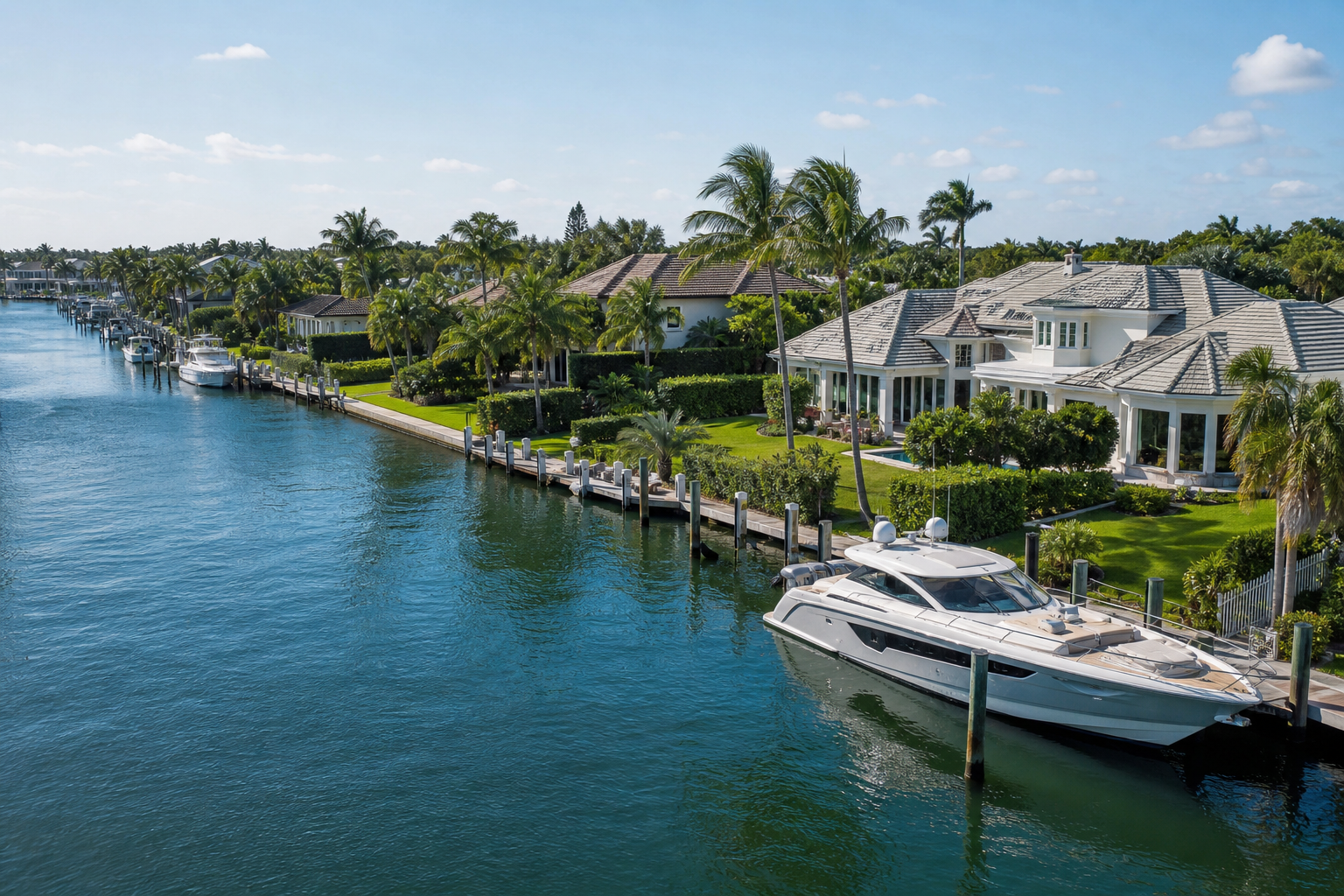
If you're weighing waterfront ownership specifically, it's worth understanding how those costs and considerations play out in other coastal markets. The same dock, seawall, and access questions that shape value here also shape it elsewhere, as our Maine Waterfront Homes for Sale buyer's guide lays out for a very different coastline. The mechanics of water access transfer; the climate and carrying costs don't.
Reading the 2026 Jupiter Market — Prices, Inventory, and Timing
The single most useful thing to understand about the Jupiter Florida real estate market 2026 is that prices are softening, not collapsing. The median sale price sits around $670,000, down roughly 5% year over year per Redfin, and Zillow's typical home value tells the same story at about $675,651, down approximately 5.1% over the past year, according to Zillow. Regional housing economists consistently frame coastal Palm Beach County as a high-price environment rather than a runaway bubble. Pricing remains elevated, but modest year-over-year declines and lengthening days on market point to normalization, not a crash. That distinction matters because it changes how you should behave: this is not a market where you panic-buy, and it's not a market where you wait for a fire sale that isn't coming.
Inventory backs up the read. Jupiter shows roughly 905 homes for sale, per Realtor.com, and about 3.4 months of supply in the Q4 2025 single-family segment, according to Blum Florida Realty summarizing MLS data. A balanced market typically sits around six months of supply, so Jupiter is still tilted toward sellers — but only modestly. At 3.4 months, you have room to be selective, to walk away from an overpriced listing, and to wait for the right property rather than the first one. That is a meaningfully different posture than the sub-two-month supply that defined the 2021–2022 frenzy.
The timing data is where buyers most often misread the market. Realtor.com reports a median 85 days on market for Jupiter listings, while Zillow shows typical homes going pending in roughly 53 days. Those aren't contradictory — they measure slightly different things — but together they give you a realistic two-month window from list to contract for a serious buyer. More important is the sale-to-list ratio: around 96%, with average sale prices landing roughly 4–5% below asking, per Realtor.com and Blum Florida Realty. That is concrete proof there is room to offer under ask. Buyers who assume they must come in at or above list are negotiating against a phantom.
Local brokers commenting in market reports describe Jupiter as active but negotiable. The combination of high sticker prices, supply in the three-to-four-month range, and average sales 4–5% under list means you can still win concessions — but you win them with strong terms, not by chasing every listing over ask. The buyers who do well here come prepared with financing locked and a clear sense of their walk-away number.
Seasonality is the lever most out-of-state buyers ignore. Snowbird-driven demand compresses inventory and stiffens seller resolve through the first quarter, when part-time residents and northern buyers are physically in town and writing offers. By summer, that demand thins out, and the same property that drew competing bids in January often sits. If your timeline is flexible, an offer written in August carries leverage that simply doesn't exist in January. You're negotiating against fewer buyers, with a seller who's watched the listing age through the slow season.
The practical synthesis: this is a market that rewards patience and preparation over aggression. With prices easing about 5%, supply giving you breathing room, and a documented 4–5% gap between list and sale, the disciplined buyer who locks financing, watches the calendar, and offers under ask on strong terms is positioned far better than the one who treats every listing as a bidding war.
In Jupiter, the calendar is a negotiating tool — the offer you make in August carries leverage that disappears by January.
The Coastal Florida Cost Layers Buyers Underestimate
The purchase price is the part of buying homes for sale in Jupiter FL that everyone studies. The carrying costs are the part that surprises people six months in. These recurring line items can add thousands of dollars a year, and several of them are non-negotiable. Confirm each one before you write an offer.
- Flood zone and elevation certificate. Much of coastal Jupiter falls inside FEMA Special Flood Hazard Areas (SFHAs). Any home with a federally backed mortgage inside an SFHA is legally required to carry flood insurance under the National Flood Insurance Program (NFIP), and the base flood elevation drives both insurability and premium, per FEMA/NFIP standards. Pull the flood zone before you fall in love with a property — it can be the difference between an affordable home and an uninsurable one.
- Windstorm and homeowners insurance. Florida homeowners pay some of the highest premiums in the country — an average around $4,231 per year, roughly triple the national average, per the Insurance Information Institute. Coastal Palm Beach County can skew higher still. Treat this as a several-thousand-dollar annual line item, not a rounding error in your budget.
- Insurance trend context. The pressure is moderating. Florida's 30-day average requested rate increase dropped to about 1.6%, down from roughly 7.6% a year earlier, according to the Florida Office of Insurance Regulation. But national premiums still rose about 11.2% in 2022 versus 2021, per Triple-I. Budget for continued upward pressure even as the rate of increase slows.
- HOA and CDD fees. Abacoa dues commonly run $200–$400 per month, while town-center condos run $491–$768 per month (around $683 typical), often bundling cable and internet. Some sub-neighborhoods layer a separate master HOA or a CDD assessment on top. Two similarly priced homes can have wildly different true monthly costs once you account for these.
- Property tax — homestead versus non-homestead. Second-home and out-of-state buyers don't qualify for Florida's homestead exemption, which raises the effective annual tax burden relative to a primary-residence owner. If you're buying a second home, model your taxes without the exemption — the difference is material.
- Dock and seawall maintenance. This applies to Jupiter waterfront homes only, and it's a cost class that doesn't exist for inland buyers. Seawalls fail, docks age, and marine structures need recurring inspection and eventual replacement. Factor an ongoing maintenance reserve into any waterfront purchase.

For second-home owners who won't be in Jupiter year-round, these carrying costs also need active management — insurance renewals, HOA compliance, and seasonal property upkeep don't pause when you fly home. Understanding how professional Boca Raton Property Management handles those ongoing obligations is a useful reference point for what a remote ownership setup actually requires.
The sticker price tells you what the home costs. The flood zone tells you what owning it costs.
Financing and Offer Strategy in a Competitive Coastal Market
Buying a home in Jupiter FL at the detached single-family level usually means a serious financing conversation, because many of those homes clear the jumbo threshold — the Q4 2025 single-family median ran near $925,000. Your buyer profile should dictate your financing route, your pre-approval timing, and how aggressively you structure contingencies.
| Buyer Profile | Financing Route | Pre-Approval Timing | Contingency Stance | Realistic Timeline |
|---|---|---|---|---|
| Cash Investor | Cash / proof of funds | Before touring | Tight inspection, no financing | Fast close, ~2–4 wks |
| Relocating Family | Conventional / jumbo | Locked pre-tour | Standard inspection + financing | ~2 mo list-to-contract |
| Second-Home Buyer | Jumbo / portfolio | Locked pre-tour | Inspection focus on seawall/dock | ~2 mo, flexible season |
The negotiation math should anchor your offer strategy. With a sale-to-list ratio around 96% and average sales landing 4–5% below ask, you can reasonably open a few points under list and still be taken seriously. The mistake is treating the list price as the floor. It isn't. In a market with roughly 3.4 months of supply, the seller who priced ambitiously and watched the listing age past the 85-day median is more receptive than the headline numbers suggest.
Win on terms, not on price. A cash investor or a buyer with locked financing can offer a shorter inspection window, a faster close, or a cleaner contingency structure — and those terms often matter more to a seller than the last $10,000. Lock your pre-approval before you tour, not after you find the house. In a two-month list-to-contract market, the buyer who has to scramble for financing after going under contract is the buyer who loses the deal.
Inspection contingencies deserve extra attention on older waterfront stock. Seawall and dock age can carry five- and six-figure repair exposure, and a standard home inspection won't fully assess marine structures. If you're buying waterfront, build a specific contingency window for a seawall and dock assessment by a qualified marine contractor. That's not a delay tactic — it's the difference between buying a home and buying a home plus a $60,000 seawall project you didn't price in.
If your target home clears the jumbo line and you're not yet positioned for that loan, there are alternative paths worth understanding before you write off the purchase entirely — our breakdown of how rent-to-own homes work and who qualifies walks through one of them. And if your Jupiter purchase depends on selling an existing property first, getting that sale organized early matters; the process for how to sell your Boca Raton home gives you a sense of the timeline you'll need to coordinate against your buy.
Mapping Your Jupiter Buying Path
Every prior section answers one question. This one connects them into a sequence. The buyers who stall are usually the ones who jump straight to scrolling jupiter florida homes for sale without first deciding what they're actually solving for. The order matters: start with your budget tier, because that determines the type of home on the table. Then separate primary residence from second-home or investment intent, because that changes your tax exposure and your financing options.
From there, the waterfront decision is the major fork — it adds an entire layer of dock, seawall, and insurance cost that reshapes your real budget. Only after those three decisions are settled does it make sense to narrow to a neighborhood shortlist, and only then to lock a financing route. Run the steps in this order and the property search becomes a filter rather than a guessing game.

Your Jupiter Buyer's Briefing Sheet
This is the action list for buying a home in Jupiter FL — copy it, work it, and confirm each item before you tour or write an offer. Every line carries a specific number or document to verify.
- Define your price tier and home type. Decide whether you're a $400K–$700K master-planned buyer or a $1.5M+ waterfront buyer before you tour. Knowing your tier turns a scattered search into a focused one.
- Lock pre-approval before touring. Determine whether your target clears the jumbo threshold — the single-family median runs near $925,000, so many detached homes will. Have the right loan product lined up before you fall for a house.
- Pull the FEMA flood zone and request the elevation certificate. Confirm SFHA status before you make an offer. The flood designation drives insurability and premium, and you want that answer early, not at closing.
- Get a written homeowners insurance quote. Budget around the $4,231 Florida average and expect coastal premiums to run higher. A written quote on the specific property beats a regional average every time.
- Confirm HOA and CDD totals. Verify monthly dues — $200–$400 is typical in Abacoa, $491–$768 for town-center condos — and ask specifically about any separate master HOA or CDD layer. These numbers belong in your monthly budget, not your closing-day surprise pile.
- For waterfront, inspect seawall and dock age. Add a dedicated contingency window for a marine-structure assessment by a qualified contractor. Aging seawalls carry repair exposure a standard inspection won't catch.
- Set your seasonal timing. Target an off-season offer for leverage and model a roughly two-month list-to-contract window (85 days per Realtor.com, 53 days to pending per Zillow). The calendar is part of your strategy.
- Build your offer math. Open a few points under list against the 96% sale-to-list benchmark, then compete on terms — short inspection windows, strong financing — rather than on price. The data says the room is there; use it.
While you finalize a Jupiter shortlist, it's worth cross-shopping nearby South Florida inventory to pressure-test your value assumptions — comparing current Boca Raton Homes for Sale against Jupiter listings at the same price point tells you quickly whether your target tier is buying more house up the coast or down it.
FAQ
Is Jupiter, FL a good place to buy in 2026?
For prepared buyers, yes. The median sits around $670,000, down roughly 5% year over year, with about 3.4 months of single-family supply per Redfin and Blum Florida Realty. That's buyer-friendlier than the frenzy of recent years without being a crash. You have room to be selective, negotiate under list, and time your offer — advantages that simply didn't exist in 2021.
What's the minimum realistic budget for a single-family home in Jupiter?
Entry detached and master-planned homes land around the low-$500Ks — Martinique at Abacoa shows a median near $522,000, per Momentum Realty. That's your practical floor for owning rather than renting. The broader single-family median runs closer to $925,000, so the gap between entry and typical is wide. Decide which end of that range your search actually targets.
Do I need flood insurance for all Jupiter homes?
Not all of them, but a meaningful share. Any home with a federally backed mortgage inside a FEMA Special Flood Hazard Area is required to carry NFIP coverage, per FEMA/NFIP rules. Because much of coastal Jupiter sits in an SFHA, you should pull the flood zone on any property before making an offer. The designation drives both insurability and premium.
How long does the buying process take for out-of-state or second-home buyers?
Plan for roughly two months from list to accepted contract — listings show 53 to 85 days on market depending on the dataset, per Zillow and Realtor.com — then add your closing period on top. Out-of-state buyers should lock financing and line up inspections early, since coordinating remotely adds friction that an in-town buyer doesn't face.
Are Jupiter HOA and CDD fees negotiable?
No. They're set by the homeowners association or community development district, not the seller, so you can't bargain them down. But they vary widely — from $200 to $768 per month across Abacoa alone — so the lever you control is choosing a community whose fees fit your budget and factoring those dues into your offer math from the start.