
Homes for Sale in Lakewood Ranch, Florida: Master-Planned Living Guide
Homes for Sale in Lakewood Ranch, Florida: What Buyers Need to Know Before They Offer
You've already filtered the noise. The search bar reads homes for sale in Lakewood Ranch Florida, you've toggled between Realtor.com and Zillow more times than you'd like to admit, and you're staring at somewhere between 935 and 1,246 active listings depending on which portal you trust (Zillow; Realtor.com). The median asking price hovers around $625,000 to $649,000. You've identified the community. What you haven't yet figured out is which piece of the community fits — because Lakewood Ranch isn't a neighborhood. It's a brand stretched across two counties, eight-plus distinct villages, four major builders, and HOA structures that change from one street to the next.
The question isn't whether to buy in Lakewood Ranch. It's which Lakewood Ranch, what you're actually paying the premium for, and which due diligence items will keep you from regretting the decision 18 months in. What follows tells you what the listing photos won't.
Lakewood Ranch is not one market. It is eight micro-markets sharing a logo, and the price you pay reflects which one you choose.
Table of Contents
- What the Lakewood Ranch Price Premium Actually Buys
- The Eight Villages — A Neighborhood-by-Neighborhood Decision Table
- Reading the Inventory — Why 1,200 Listings Doesn't Mean 1,200 Options
- New Construction or Resale — Choosing the Right Path
- The Pre-Offer Verification Checklist
- Timing the Offer — Reading Seasonality and Negotiation Windows
- Buyer Questions Answered Before You Write the Offer
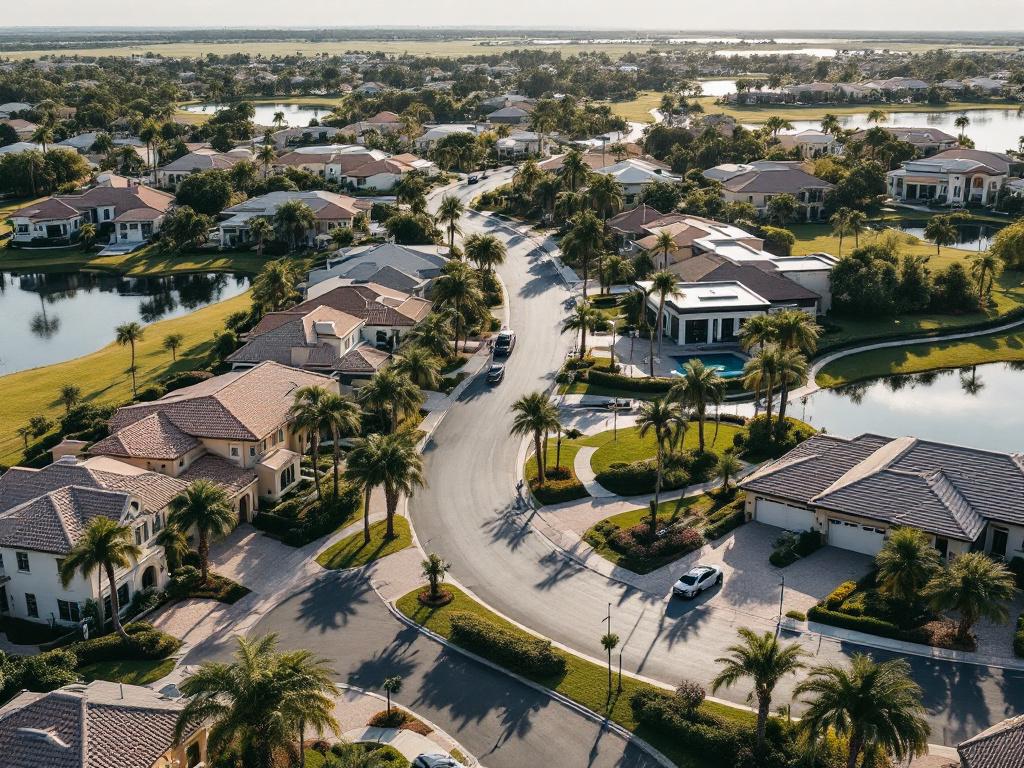
What the Lakewood Ranch Price Premium Actually Buys
The first thing to understand about homes for sale in Lakewood Ranch Florida is that the pricing premium is measurable. The median listing sits between $625,000 and $649,000 (Realtor.com; Zillow). Active inventory tiers cleanly by bedroom count: 2-bedroom homes average around $424,590, 3-bedrooms around $593,801, and 4-bedrooms reach roughly $699,719 (Trulia). The top end of the market reaches $6,950,000 (BuySarasota.com [VENDOR SOURCE]). A buyer comparing a Lakewood Ranch 3-bedroom against a comparable home in unincorporated Manatee County 15–20 minutes away will typically see a meaningful price gap on similar square footage.
That premium is real. The question is what it funds.
Master-planned amenity infrastructure. Recreation centers, trail networks (the community markets 150+ miles of trails), lakes, and town centers all sit downstream of the price tag. These amenities are financed through two parallel structures most buyers conflate but shouldn't: HOA dues and CDD (Community Development District) assessments. CDD fees are separate from HOA dues and appear as a line item on the annual property tax bill — many buyers miss this until the first November tax statement arrives. Before you offer, pull the property's tax bill and locate the CDD line specifically.
Design and architectural review enforcement. Every exterior modification — paint color, landscaping choices, fence style, even certain plantings — requires architectural review board approval. This is what produces the visual consistency that supports resale value across the community. It is also why your neighbor cannot paint their front door turquoise and tank the comp for your refinance appraisal. If you value creative freedom over your exterior, this constraint will frustrate you. If you value predictability, it's the feature you're buying.
Builder concentration and quality control. Lakewood Ranch is dominated by national and regional builders — Neal Communities, Toll Brothers, Pulte, Lennar, WCI. Construction quality is more predictable than what you'd find with scattered-lot custom builds, but you are buying a product, not a one-off. Floor plans repeat. Finish packages repeat. The upside is that defects are typically known and warrantied. The downside is that your home will not be unique.
Governance overhead. Multiple sub-HOAs sit beneath the master association. Each has its own reserves, assessments, and rules. The premium funds the governance machine that enforces the standards above — and that machine has overhead.
The Lakewood Ranch premium is not paying for prestige. It is paying for enforced consistency — and that is either a feature or a friction depending on the buyer.
The available market data confirms Lakewood Ranch commands higher pricing than surrounding ZIP codes. Whether that premium is justified is a personal calculation, not an objective verdict. A buyer who values predictability, amenity access, and design consistency may find the premium fair. A buyer who wants larger lots, no HOA oversight, or full architectural latitude will not. Buyers cross-shopping premium Florida coastal markets like Boca Raton real estate often find similar tradeoffs around HOA governance and amenity packages — the structure of master-planned premium pricing rhymes across the state's higher-end communities.
The Eight Villages — A Neighborhood-by-Neighborhood Decision Table
"Lakewood Ranch" is a brand covering distinct villages, each with its own builder mix, price tier, age demographic, and amenity profile. A buyer touring Lakewood National (golf-centric, gated) on Saturday morning and Esplanade (resort-amenity, social-heavy) on Saturday afternoon is effectively touring two different products under the same logo. Treating them as interchangeable is the most common mistake buyers make in the first 30 days of their search.
The table below is a starting framework. Price tier is described qualitatively because village-level median pricing shifts week to week — pull live numbers from Zillow or Realtor.com at the time of your search and cite them to that retrieval date.
| Village | Price Tier | Primary Character | Lifestyle Anchor |
|---|---|---|---|
| Lakewood National | Upper-mid to high | Gated, golf community | Championship golf, resort pool |
| Esplanade at Azario | Mid to upper-mid | Resort-style amenity | Bahama Bar, wellness, pickleball |
| Del Webb (55+) | Mid | Active adult, age-restricted | Age-qualified social calendar |
| Polo Run | Mid to upper-mid | Solar-powered community | Sustainability, family-oriented |
| Mallory Park | Mid | Family, K-8 access | Walkable to schools, parks |
| Indigo | Mid | Maintenance-included | Lower-effort ownership |
| Country Club East | Upper-mid to high | Established, gated | Mature landscaping, golf access |
| Waterside | Mid to high | Newer, lake-focused | Kingfisher Lake, Waterside Place |
Use the table as a filter sequence, not a menu.
Age-restriction filter first. Del Webb is 55+. If you have school-age children or plan to within five years, that village is off the list regardless of price. No negotiation, no exception.
Golf vs. non-golf. Lakewood National and Country Club East carry mandatory or optional golf memberships that materially change total cost of ownership. A non-golfer who buys into a golf community is paying for an amenity they will never use — often $3,000–$15,000+ annually depending on the membership tier. If you don't golf, filter these out.
Maintenance-included vs. fee-simple. Indigo and certain Esplanade products bundle lawn care and exterior maintenance into HOA dues. Country Club East generally does not. The practical difference is roughly $200–$400 per month in either direct cost or your weekend time. Decide which side of that equation you want before you tour, not after.
Town-center proximity. Waterside Place changes the calculus for buyers who want walkable dining, farmer's markets, and event programming. Older villages don't offer this. If walkability matters, it eliminates half the list.
Resale liquidity at the village level. Ask any agent for the trailing 12-month sales count and median days on market for that specific village, not for Lakewood Ranch broadly. The community-wide 95-day average (Realtor.com) is a blended number. Individual villages vary significantly — a desirable 3-bedroom in a fast-moving village may turn in three weeks while a niche floor plan in a slower village sits for six months.
Shortlist two or three villages before touring. Touring all eight in a weekend is how buyers come home confused and end up offering on whichever home felt most recent, not whichever home fits best. Buyers cross-shopping Lakewood Ranch against the east coast often look at Boca Raton homes for sale for a comparable master-planned premium with ocean proximity — the same shortlist discipline applies.
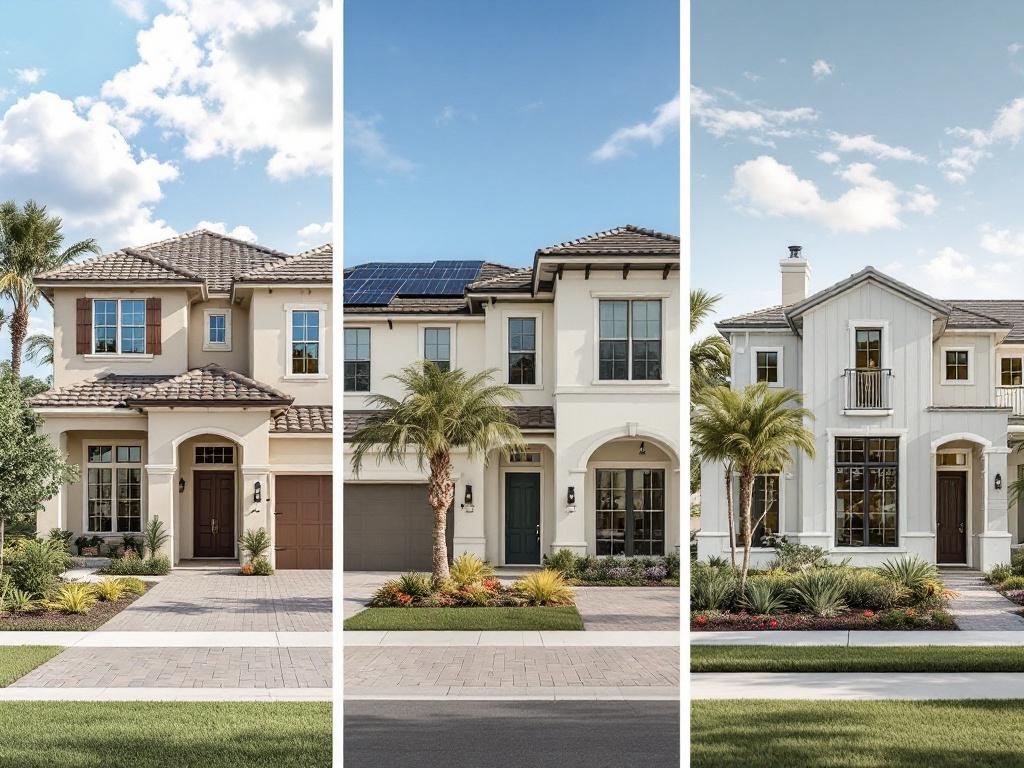
Reading the Inventory — Why 1,200 Listings Doesn't Mean 1,200 Options
Active inventory between 935 and 1,246 homes (Zillow; Realtor.com) sounds like abundant choice. After applying filters that matter — bedroom count, village, price ceiling, lot size, construction status — most buyers find 20 to 40 homes that actually fit. Here's how to read what you're seeing.
- New construction vs. resale split. A significant portion of Lakewood Ranch inventory is builder spec inventory and to-be-built homes. These show up as "active" on portals but may carry 8–14 month delivery timelines. Filter "construction status" on Zillow and Realtor.com to separate move-in-ready from to-be-built. A buyer who needs to occupy in 60 days has just cut their effective inventory by 30–50%.
- Price clustering and the dead zones. Average prices by bedroom — $424,590 for 2-bed, $593,801 for 3-bed, $699,719 for 4-bed per Trulia — reveal the natural tiers builders price into. Buyers searching the dead zone between roughly $480,000 and $560,000 will find fewer options because few floor plans land there. Widen your search increments to ±$50K instead of ±$25K to surface adjacent inventory you'd otherwise miss.
- The 95-day-on-market signal. Community-wide days on market averages 95 days (Realtor.com). A listing under 30 days is fresh and likely priced firmly. A listing past 95 days is signaling something — pricing, condition, or seller circumstance. Past 120 days, you have real negotiation room. Treat days-on-market as a tactical input, not a quality judgment.
- Snowbird seasonality. Inventory swells October through December as seasonal owners list ahead of the season. Contracts spike January through April as Northern buyers visit. Summer inventory thins because fewer listings come on, but the listings that remain often have more motivated sellers. Each side of the calendar has a different negotiation posture.
A 95-day average is a community number. Your specific village, price tier, and floor plan move at a different pace — and that pace is your real negotiating leverage.
- The 4-bed premium math. The $699,719 average for 4-bedrooms (Trulia) is roughly 18% above the 3-bedroom average. If you're flexible on bedroom count, dropping from 4 to 3 frees real budget for upgrades, a better lot, or a higher-tier village. Many buyers default to 4 bedrooms out of habit when 3 plus a flex room would serve them identically.
- Listings that never appear on Zillow. Some Lakewood Ranch builders pull active inventory off third-party portals and only display units on their own builder websites. A buyer searching only Zillow can miss 10–20% of available product. Cross-check Neal Communities, Toll Brothers, Pulte, and Lennar directly — and ask your agent for the builder MLS feed.
New Construction or Resale — Choosing the Right Path
In most US markets, the new-construction vs. resale choice is a default — one option dominates. In Lakewood Ranch, both are abundant, which means the choice is unusually consequential. The matrix below maps the tradeoff line by line.
| Decision Factor | New Construction | Resale |
|---|---|---|
| Time to occupancy | 4–14 months (build); 0–60 days (spec) | 30–60 days post-contract |
| Pricing flexibility | Incentives common; sticker rarely moves | Direct price negotiation |
| Customization | Floor plan + finish choices | What you see is what you get |
| Warranty | 1–2 year builder; 10-year structural | None unless seller-provided |
| Landscaping maturity | New install, 1–3 years to fill | Established, mature |
| HOA dues at start | Sometimes phased lower | Full current rate |
| CDD bond exposure | Higher unpaid bond balance | Partially amortized |
| Lot premium | Charged separately ($20K–$150K+) | Already in the price |
The CDD bond debt point deserves its own emphasis because it's rarely explained at the offer table. Newer phases carry higher per-home CDD bond debt because the infrastructure is recent and largely unpaid. Older villages have CDD bonds that have been amortizing for 10–20 years and may be substantially paid down. Request the CDD disclosure document for any property you're considering and read the bond balance line. That number is debt attached to the property until it's paid off.
Three buyer profiles map cleanly to the matrix.
The speed-priority relocator. You need to occupy within 60 days for a job start, a school enrollment deadline, or a closing chain on the home you're selling. Resale or builder spec inventory only. To-be-built construction is off the table no matter how attractive the floor plan looks on the brochure. If you're selling an existing home to fund the move, a resource like the sell your Boca Raton home guide outlines the same closing-chain logic that applies to any premium Florida market.
The customization-priority buyer. You want your finish choices, your floor plan, your lot orientation. New construction with a to-be-built timeline is the right path. Budget 10–14 months and read the builder contract carefully — specifically, check whether the contracted price is fixed or subject to escalation clauses tied to materials or labor cost increases. Escalation clauses can add 5–10% to the final price, and they appear in more new-construction Florida builder contracts than most buyers realize.
The value-priority buyer. You want the most house and the most mature lot per dollar. Resale wins. Negotiate hard on properties past 95 days on market (Realtor.com) and look for estate sales, relocation-forced listings, and seasonal sellers who've already moved north.
The warranty-versus-known-condition tradeoff is the real question underneath all of this. New construction gives you a warranty but unknown long-term defect patterns — you'll discover what works and what doesn't over the first three Florida summers. Resale gives you a home that has already been stress-tested through hurricanes, summer humidity, and the seasonal HVAC cycles that reveal weak points. Neither is universally superior. Pick the risk profile that matches your tolerance.
The Pre-Offer Verification Checklist
By the time you're 72 hours from writing an offer, you should have answers to every item below. Missing answers are not minor — they are the source of post-close regret. Work through this list with your agent, not after.
- Current HOA dues — broken out by sub-association. Request both master HOA and village-level HOA statements. Confirm what's included: cable, internet, lawn maintenance, exterior paint, roof reserves, amenity access. Ask for the most recent reserve study and a five-year assessment history. An underfunded reserve study is a future special assessment waiting to happen.
- CDD annual assessment and bond balance. Pull the property's most recent tax bill from the Sarasota County or Manatee County Tax Collector website. CDD assessments appear separately from ad valorem taxes. Note the outstanding bond balance — this is debt attached to the property until paid off, typically over 20–30 years. A higher bond balance means higher annual CDD payments for longer.
- Special assessment history (past five years). Ask the HOA management company directly: have any non-routine assessments been levied in the past 60 months? If yes, why, and what was the per-unit cost? A history of special assessments signals either a reserve study problem or aging infrastructure — both are forward-looking risks.
- Rental restrictions. Many Lakewood Ranch sub-associations restrict short-term rentals (under 30 days, sometimes under six months) and may require HOA approval of tenants. If the property is an investment or you plan future flexibility on rental income, this is a deal-breaker check. Read the village CC&Rs in full before offering. Buyers evaluating Florida investment property elsewhere can compare LWR's rental rules against guidance in the Florida condo buying guide.
- Flood zone designation (FEMA). Pull the FEMA flood map for the property address. A home in zone AE or VE will require flood insurance, materially affecting monthly cost. A home in zone X does not require it but may still benefit from coverage given Florida's storm exposure. Get this in writing before you remove contingencies.
- Wind/hurricane insurance availability. Florida's insurance market has tightened sharply. Confirm which carriers will write the property and obtain a binding quote before you remove the inspection contingency. A property that cannot be insured affordably is a property you cannot finance — lenders require coverage at closing. If you plan to hold the home as a long-term investment or seasonal residence, a professional Boca Raton property management framework illustrates the kind of operational oversight that applies equally to remotely owned Lakewood Ranch homes.
- Roof age and 4-point inspection. Florida insurers commonly require 4-point inspections on homes over 20 years old, and roofs nearing 15+ years may trigger non-renewal or coverage denial. Ask for the roof installation date in writing — not "approximately" — and request the original permit if available.
- School zoning verification. Do not trust marketing materials, agent representations, or listing portal data. Confirm the assigned elementary, middle, and high school directly with the Sarasota County or Manatee County school district website using the property's exact address. School zone boundaries shift periodically.
- Comparable sales — last 90 days, same village. Ask your agent for sold comps filtered to the same village and the same price tier, not community-wide. The 95-day community average (Realtor.com) does not reflect your specific micro-market, and the comps that justify your offer price need to be like-for-like.
- Builder warranty status (new construction) or seller disclosure (resale). For new construction, confirm the warranty start date and what's covered in years 1, 2, and 10. For resale, read the Florida seller's disclosure carefully — material defects must be disclosed under state law, and the disclosure form is your written record of what the seller represented at the time of sale.

Timing the Offer — Reading Seasonality and Negotiation Windows
The data anchors your starting point. Average days on market sits at 95 days (Realtor.com). Active inventory ranges between 935 and 1,246 listings (Zillow; Realtor.com). These are point-in-time numbers — retrieve current values before making timing decisions because Gulf Coast inventory can shift 10–20% in a single quarter.
The seasonal cycle. Florida's Gulf Coast real estate runs on a snowbird calendar. October through December sees inventory rise as seasonal owners list ahead of the season. January through March brings the heaviest buyer traffic and the tightest market for desirable properties. April and May produce the closing surge as deals struck during peak season finalize. Summer — June through September — is the slow season. Fewer buyers, more motivated sellers, and the best window for negotiation if you can tolerate the heat and the hurricane-season insurance underwriting friction. Insurance binders written between June and November come with more carrier hesitation and sometimes higher premiums.
Builder incentive cycles. New-construction builders push incentives at quarter-ends (March, June, September) and year-ends (December). The most common incentive packages are interest-rate buydowns (2-1 buydowns are standard), closing cost credits, and design center allowances. Builders rarely cut sticker price because they protect comparable sales for future buyers — but stacked incentives can equal roughly $20,000–$60,000 in effective value on a $600K–$800K home. Ask specifically about rate buydowns if you're financing. The right question is: "What is the full incentive stack available on this home this month?"
Resale seller motivation signals. A listing past 95 days is signaling something — pricing, condition, or seller circumstance. Train yourself to ask: why is this seller selling, and what is their timeline? Estate sales, relocations driven by job changes, and divorce listings typically carry urgency that shows up in negotiation flexibility. Lifestyle-upgrade sellers — owners trading up to a bigger home in the same community — generally do not. Same property, very different negotiating dynamic.
The interest rate environment effect. When mortgage rates rise, the buyer pool thins and negotiation leverage shifts toward buyers. But builders respond with rate buydowns that can offset much of the increased cost, partially closing the gap. When rates fall, buyer pools swell, multiple offers return, and resale sellers regain leverage. Rate environment is one variable in the timing equation, not a verdict. Buyers exploring other Florida coastal options often weigh Lakewood Ranch against markets like Stuart, Florida, where the price-to-amenity equation runs differently and seasonal dynamics shift the same way.
The most important discipline isn't about reading the market. It's about reading yourself.
Define the price at which the Lakewood Ranch premium no longer justifies the purchase versus alternatives 15–20 minutes away. Write that number down before you tour. Tape it to the inside of your folder. The single biggest defense against emotional overpayment is a walk-away number set when you're still thinking clearly — before the model home staging, before the sales counselor's pitch, before the lot you fell in love with goes pending on Saturday morning.
Define your walk-away number before you tour the first home. The buyers who overpay in Lakewood Ranch are the buyers who never wrote one down.
Buyer Questions Answered Before You Write the Offer
These are the questions that surface in the final 72 hours — the ones that keep buyers up at night the day before they sign. Each answer below is decision-oriented. The goal is what to do, not just what to know.
How long do homes typically stay on market in Lakewood Ranch?
Community-wide average is 95 days (Realtor.com). That average masks substantial village-level and price-tier variation. A 3-bedroom in a sought-after village under $600,000 may move in 21 days. A $1.5M+ home with a niche floor plan can sit for 200+ days. Always ask your agent for the trailing 90-day median for your specific village and price band before assuming the community average applies to your search. The right number is the one that matches your actual target, not the headline figure.
Can I rent out my Lakewood Ranch home?
It depends entirely on the sub-association. Most Lakewood Ranch villages prohibit short-term rentals — typically defined as under 30 days, sometimes extended to under six months. Long-term rentals are usually permitted but may require HOA approval of tenants, a minimum lease term, and a registration fee. Confirm in writing by reading the village CC&Rs in full before you offer. If rental income is essential to your purchase math, this is non-negotiable due diligence, not a question to defer until after closing.
What is the true monthly cost beyond the mortgage?
At the median range of $625,000 to $649,000 for homes for sale in Lakewood Ranch Florida (Zillow), budget for: HOA dues (varies significantly by village, from modest to substantial), CDD assessment on the annual tax bill, property taxes at the Sarasota or Manatee County millage rate, homeowner's insurance (premiums rising statewide), and flood insurance if the property sits in zone AE or VE. Ask your agent for a fully-loaded monthly cost worksheet that includes all of these line items. The list price alone is misleading — sometimes by $800–$1,500 per month once everything is stacked.
Can I negotiate with a builder on new construction?
Sticker price rarely moves — builders protect their comparable sales for future inventory. But incentives are absolutely negotiable: rate buydowns, closing cost credits, design center allowances, and lot premium reductions on slower-moving lots. Quarter-end and year-end are the best timing windows. The question to ask explicitly is: "What is the full incentive stack on this specific home this month?" Not "is there any flexibility on price" — that gets you a polite no. Asking about the incentive stack gets you the menu.
Do I need an agent who specializes in Lakewood Ranch?
Yes — or at minimum, one who has closed at least 5–10 transactions in the community in the past 12 months. The CDD structures, sub-association rules, builder relationships, and village-level pricing dynamics are specific enough that a general Gulf Coast agent will miss things that cost you real money. Ask for a transaction list before you sign a buyer's agreement. The same principle applies in any specialized Florida market — whether you're buying in Lakewood Ranch or working with a team like Boca Raton real estate on the east coast, transaction-specific experience in the exact micro-market matters more than general credentials or years in the business.